Hot Environmental Topics

David C Sulock


Recent Posts

Mosquito Myths

Jun 18, 2018 2:21:00 PM / by David C Sulock posted in Mosquito Remedation, mosquito management service, mosquito control service, mosquito removal, mosquito removal companies

0 Comments

The 10 Most Common Mosquito Myths

 Killmosquitoes-1

Myth 1:          All Mosquitoes bite.

False, only the female mosquito bites and some females do not bite at all.  The females that do bite need the protein in blood so she can lay eggs.  Rest assured if you get bit by a mosquito it was a female.


Myth 2:          Mosquitoes are small so a fan will keep them away.

This is true and false.  Mosquitoes are small, yes but a fan doesn't keep them away by blowing them away. Fans dilute our carbon dioxide, heat and individual smell -  all of which a mosquito uses to find us.


Myth 3:         Mosquitoes do not like the smell of citronella and DEET.

Yes and no, both citronella and DEET interfere with the mosquitoes receptors which are used to find blood meal.  In essence, these compounds are meant to hide you from mosquito.  What about garlic?  Like citronella, garlic is meant to mask your scent to confuse the mosquito’s receptors.   There is no real evidence that mosquitoes are repelled by garlic.  


Myth 4:          Fake news says that diseases are on the rise from mosquitoes.

As of May 1, 2018, the CDC states that mosquito, tick and fleabites have tripled in the United States.  From 2004 to 2016, over 640,000 cases have been reported https://www.cdc.gov/media/releases/2018/p0501-vs-vector-borne.html


Myth 5:          My blood type is irresistible to mosquitoes.

Studies have pointed to type O blood being more appetizing to mosquitoes.  If that is true, the research is not clear as to why.   What is known is that some people are simply more attractive to mosquitoes than others and this is believed to be from the carbon dioxide production of the individual as well as their scent.


Myth 6:         Bug zappers kill mosquitoes.

Studies of the dead insects in bug zappers found that the percentage of mosquitoes is relatively small.  This could be influenced by the fact that other insects are in greater numbers in a yard where a zapper is utilized.

Mosquito Ad-Color-3.5-1

Myth 7:        Mosquitoes only bite at night.

Sadly mosquitoes can and do bite in the heat of the day.  The Asian tiger mosquito is known to bite during the day.


Myth 8:        After a mosquito bites me, it will die.

If a bee stings you it will die. Mosquitoes can bite many people to get the blood needed to lay eggs, after the 

eggs are laid it will go bite someone else, so the circle of life can continue.


Myth 9:   My yard doesn't have any standing water so mosquitoes don't breed in my yard


Fact, if you are getting bitten by mosquitoes, you have a mosquito breeding ground on or immediately adjacent to your property.  Mosquitoes can lay eggs in a cap of water.


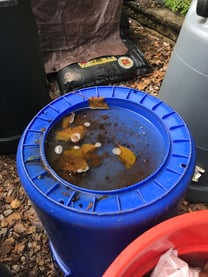
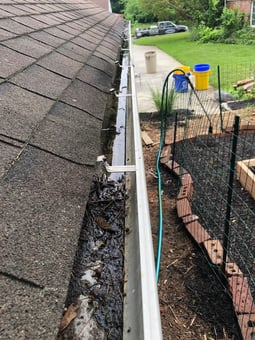
We treat thousands of properties a year for mosquito control and 90% have water that can and do breed mosquitoes.  Most people simple are not diligent enough to dump water from containers.   The following photos are from properties that we treat and that we inform owners of their water problems and they still don't get rid of all potential breeding areas


Mosquito control dont's

mosquitoes lay eggs in stagnant water


Gutters are popular breeding areas for mosquitoes

Photo Jun 01, 1 00 04 PM


Myth 10:        The coloring of clothing can attract mosquitoes.

There is evidence that says if you have darker colors you are more likely be bit than if wearing a lighter color.   Darker clothing maybe thicker and allows your body to retain heat, which is one of the factors a mosquito looks for when searching for a blood meal.

More Information on Mosquito Control can be found at the following links.


 Mosquito Control Service


Read More

How long does an Oil Tank Last?

Mar 6, 2018 4:01:00 AM / by David C Sulock posted in oil tank removal new jersey, oil tank removal nj, tank removal grants, tank leak, OIl Tank Sweeps, oil tank

2 Comments

What is the life expectancy of an oil tank?

How long does an oil tank last?  When do you replace an oil tank.  These are popular oil tank questions.  All things have a finite life expectancy. Both aboveground storage tanks (ASTs) and underground storage tanks (USTs) have a usable life. The problem is your tank can fail (holes appear) and you may never notice.  An industry average for the life span of an oil tank is 20 years, some tanks last longer and some shorter.  This time frame is greatly dependent on the type of oil tank, construction of the tank (meaning thicker walled tanks generally can last longer). environment the tank is in (indoor - outdoor),  and the contents of the tank.  Harsher environments tend to shorten the lifespan of pretty much anything, including steel tanks. 

 
my oil tank leaked


When I ask people how long they think a tank is supposed to last I typically get silence or "I don’t know".   Then, I tell them thank you for not saying "Tanks last FOREVER".   A simple rule of replacement is if the roof has been replaced, so should the tank.    This is for all the people who are using a tank TODAY and if your house was built between 1950 and 1995, your tank is beyond any reasonable expectation of usable life and should be replaced.  No there is not a likely possibility that the original tank from the day your house was constructed has been replaced.  The saying 'if it isn’t broken don’t fix it' is unfortunately followed when it comes to oil tanks.   Simply put, if people replaced tanks within a reasonable amount of time, you wouldn’t have tank leaks and expensive environmental cleanups.

How do oil tanks leak?  Many oil tanks rust through from the inside out.  This most often occurs when the oil is not present, meaning upper portion of the tank where the tank is empty and the oil is not present to lubricate the steel.  Tanks can also leak due to the use of low sulfur fuel.  Heating oil tanks that have low sulfur fuel and water can allow microbial growth to occur.  Secretions from these microbes can produce acids that can corrode a steel tank.


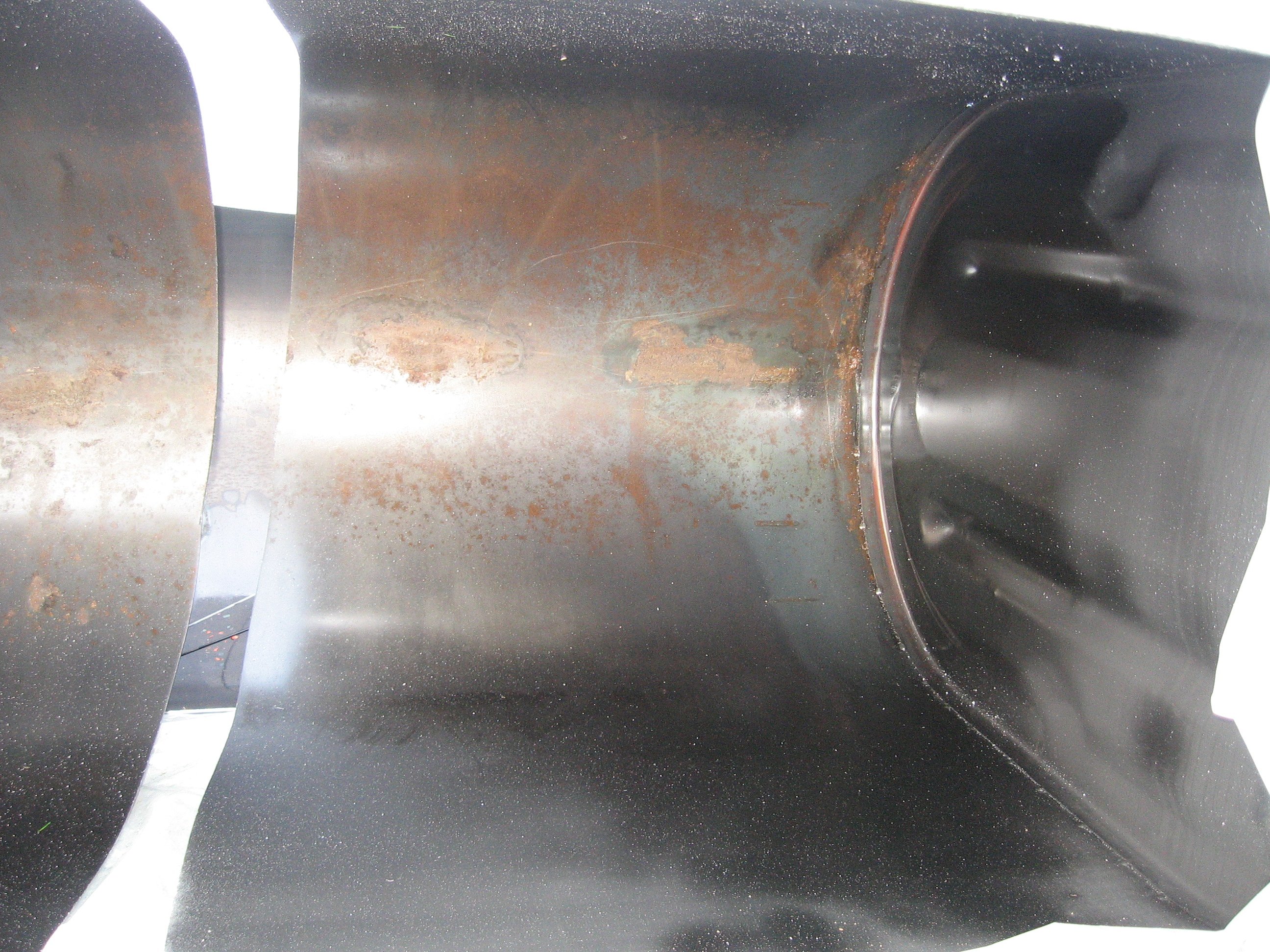
oil tanks can rust from the inisde

The photo above is the inside of a cleaned and cut open oil tank.   What is really interesting is the rust you see on the bottom of the tank.  This is the corrosive effect of the microbial activity in the tank.  Yes an oil tank can corrode from the inside of the tank.


Click Here to Learn about Testing Oil Tanks for Leaks

Aside from corrosion inside the tank, an oil tank can deteriorate from the outside due to environmental conditions.   Rust never sleeps and for corrosion to occur you need metal, oxygen and moisture.   How fast a given metal rusts is based on the environment the metal is exposed too. 


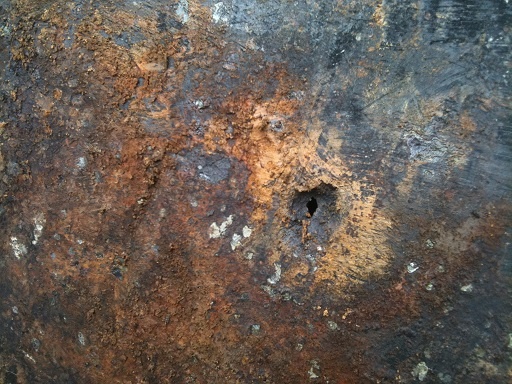
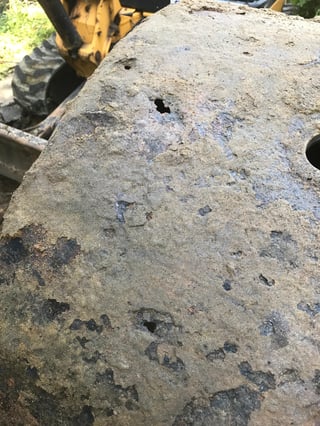
Holes in Underground Oil Tank


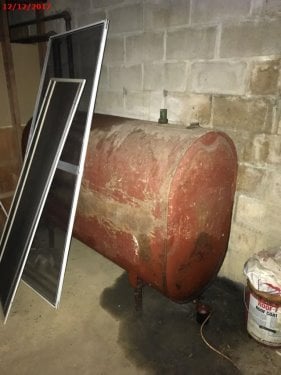
Aboveground oil tanks may look fine from a cursory exterior view but in fact, could heavy corroded on the inside and be ready to fail. 

Underground oil tanks are thicker than comparable aboveground tanks due to a more corrosive environment.  In short, an indoor rated AST is thinner than an outdoor rated AST, which is thinner than a buried UST.  Curren has found that there is a wide variation in indoor aboveground and outdoor aboveground oil tank life spans due to the considerable variation in both the quality and thickness of steel (older tanks seem to have been a heavier gauge steel), which helps prolong the life of the tank.


Tank Questions? Click Here

We have seen indoor oil tanks in good condition that are 60 years old or older, and we have found failures in newer oil storage tanks that may have been made of thinner or cheaper steel and that did not last as long as the original ones.  The tanks made immediately following WWII are of higher quality, saying things are not made as good as they used to be is a very true statement when it comes to oil tanks.

Rather than guess a tanks oil tank condition, we suggest that if your home has an older aboveground oil storage tank, twenty years old or older, you should replace the tank.  Keep in mind many brand new oil tanks have a 10 year warranty.

What Can Cause an Oil Tank To Leak?

  • Exposure of the oil storage tank to wide temperature swings, especially in cold and humid climates can increase in-tank condensation (water)  leading to corrosion.
  • The oil inside the tank corrodes the tank.   How is it possible that oil can corrode metal.   Bacteria forms in the tank from moisture (condensation), since we want clean air EPA has mandated that the sulfur content in fuel is lower.  An environmental such as a tank of oil with low sulfur is actually a conducive environment for bacteria.  So now you have bacteria thriving in the tank as part of their biological activity corrosive compounds are created from the bacteria that corrode the tank.  You got all that?
  • Above Ground oil tank Leaking
  • Exposure of the tank fill or vent pipes to rain, especially to roof runoff for tanks mounted under the eaves of a home and especially if the oil fill cap is not securely tightened after filling with oil.  You see the rain water soaks the soil around the tank which hastens corrosions.  Tanks under concrete and asphalt tend to last longer as they are shelter from rain.
  • External oil tank rust due to exposure to the weather. Many small tanks, 275 to 300 gallon tanks were used for unintended uses.  Meaning many of these size tanks, were never rated for outdoor use, but have been used for outdoor use and some even buried.   You can tell what use a tank is rated for by reading the UL label that is affixed to the top of the tank.  Manufacturers of newer oil storage tanks in this size range often have removed this "indoor use only" wording from the UL label.
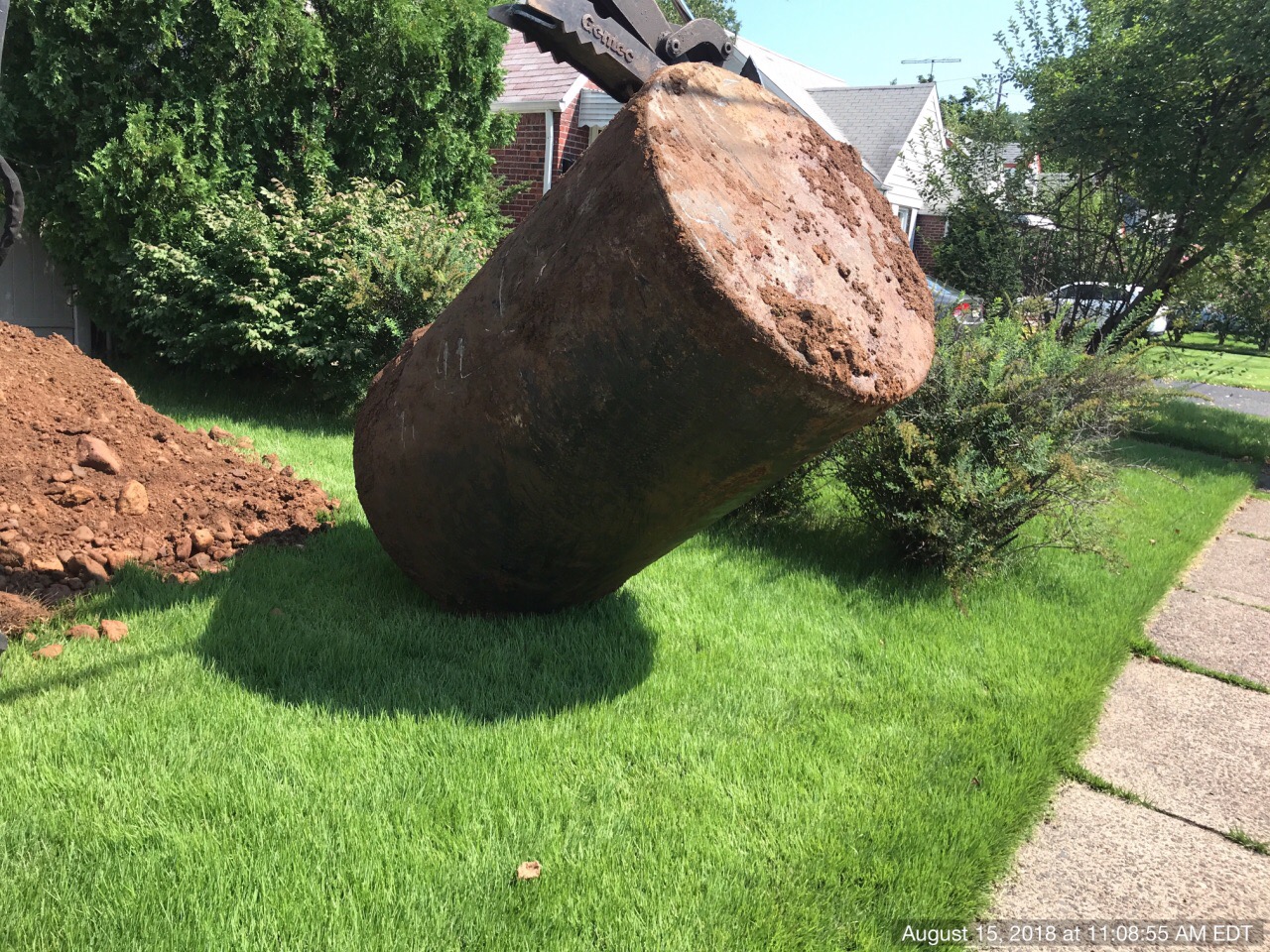
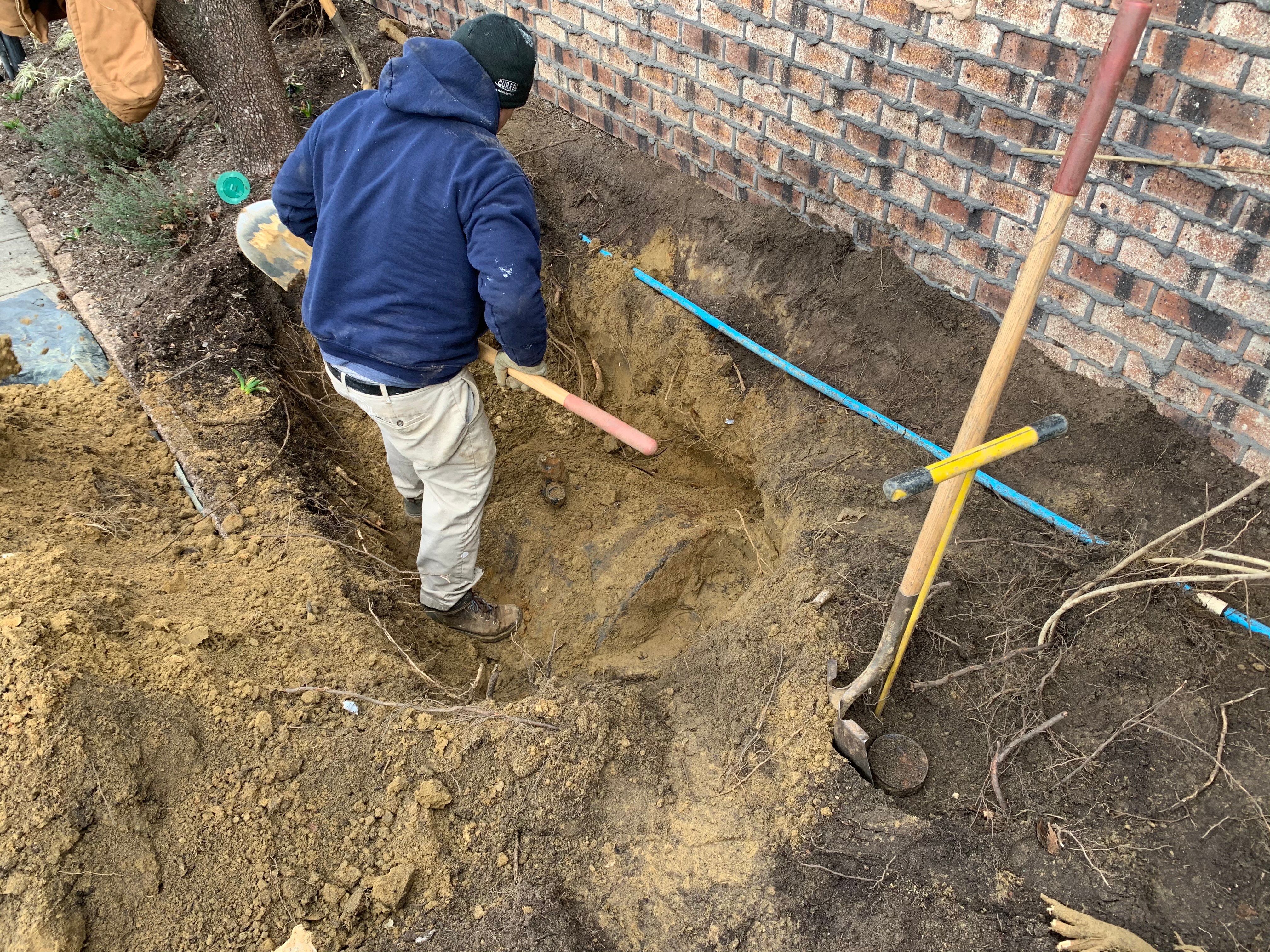
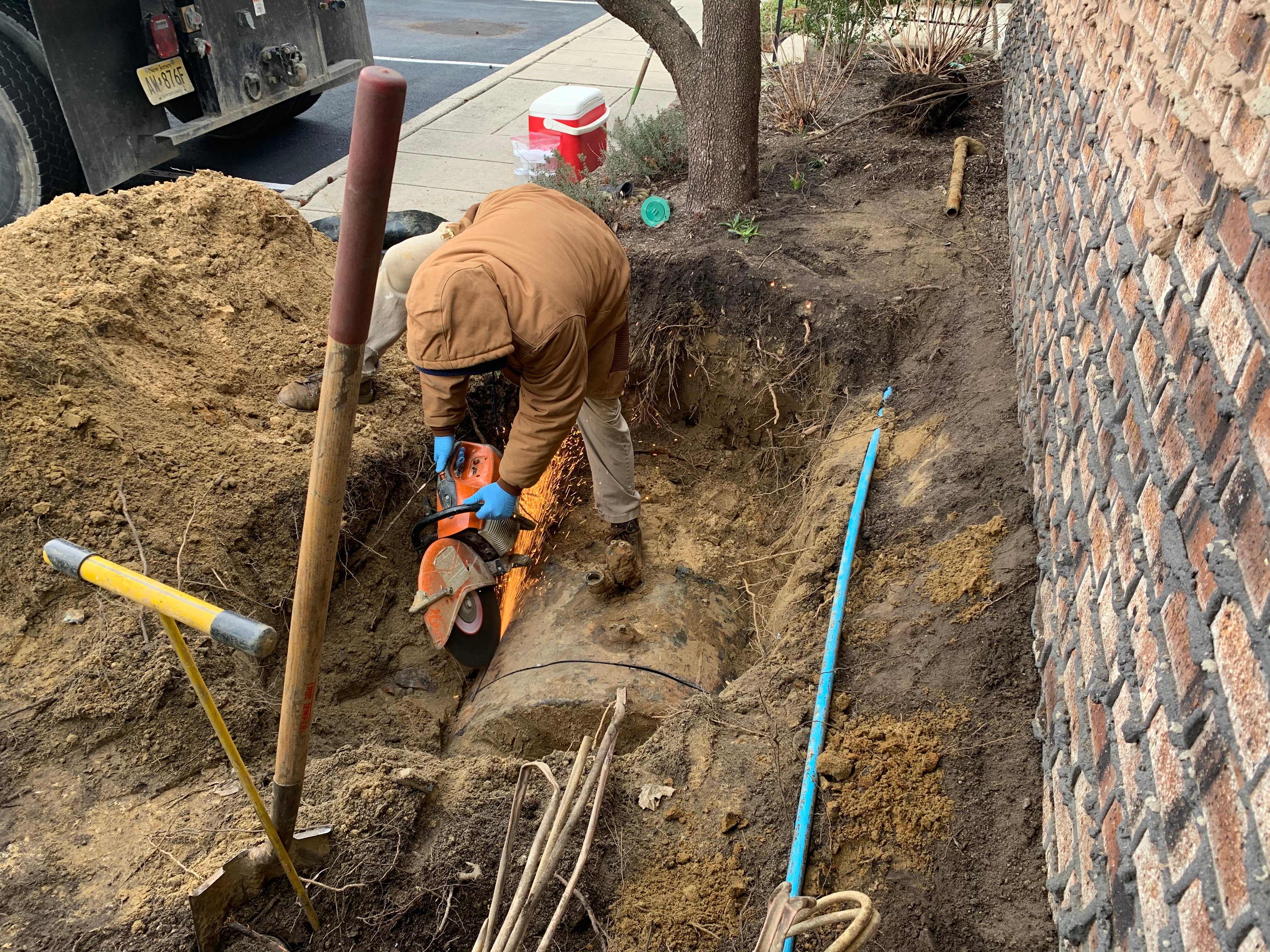
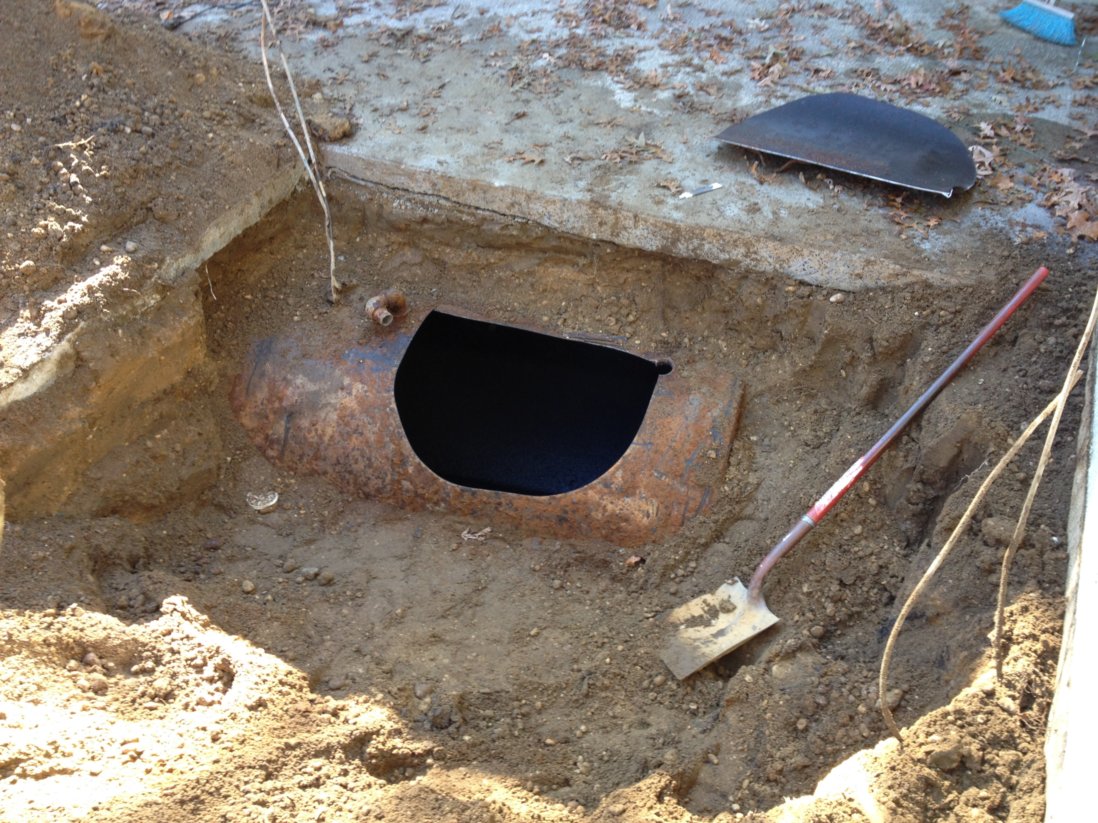
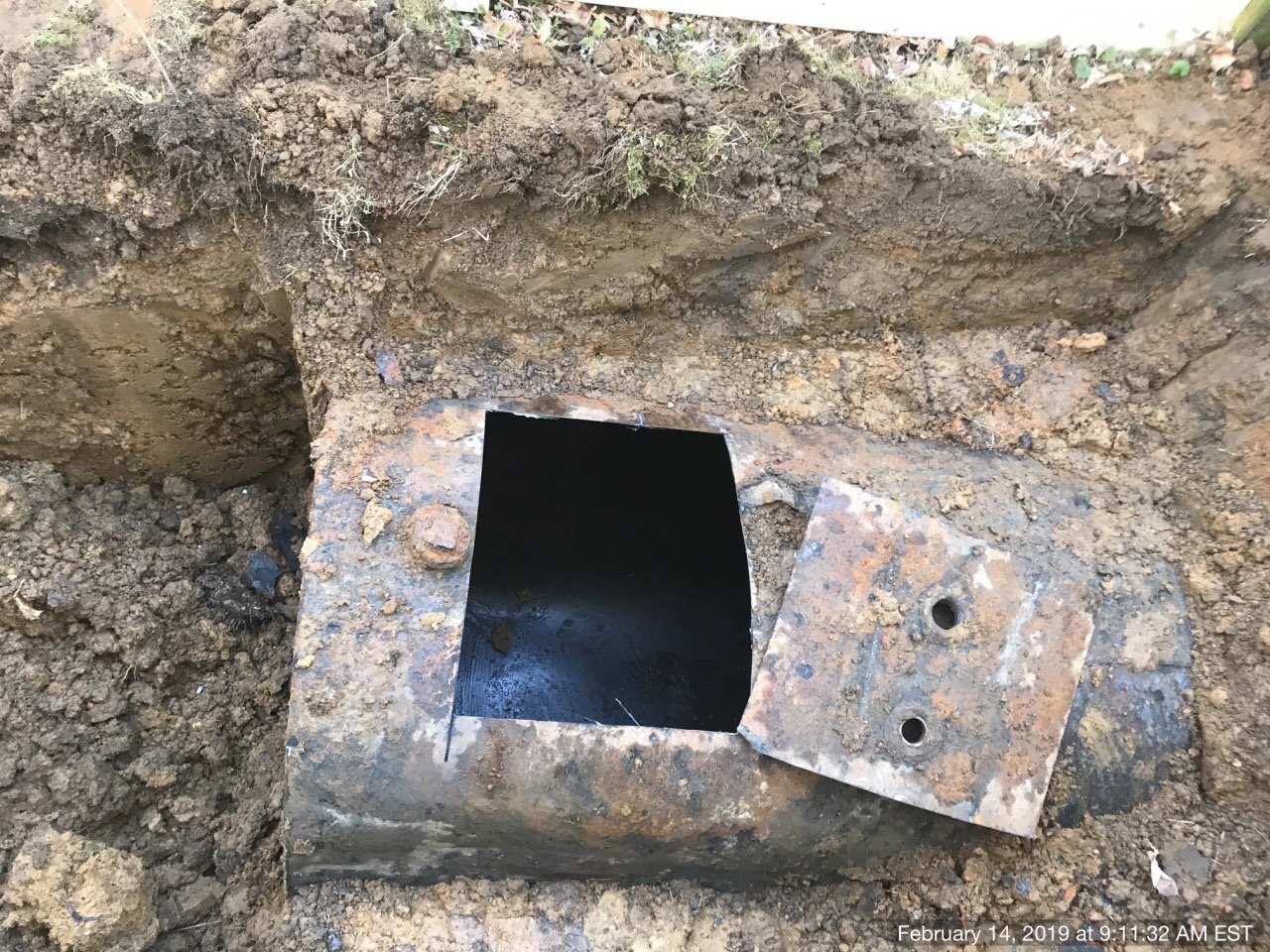
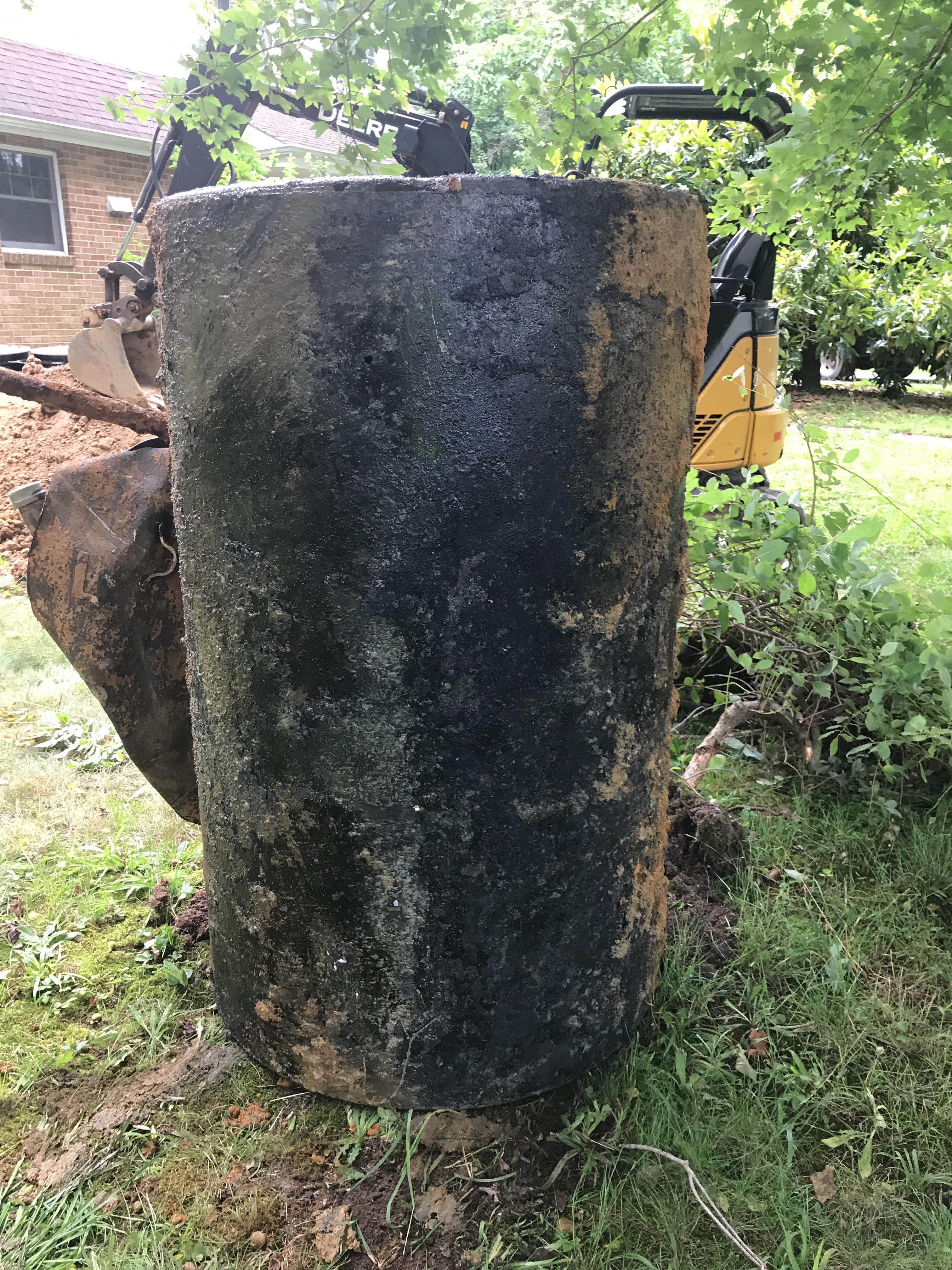
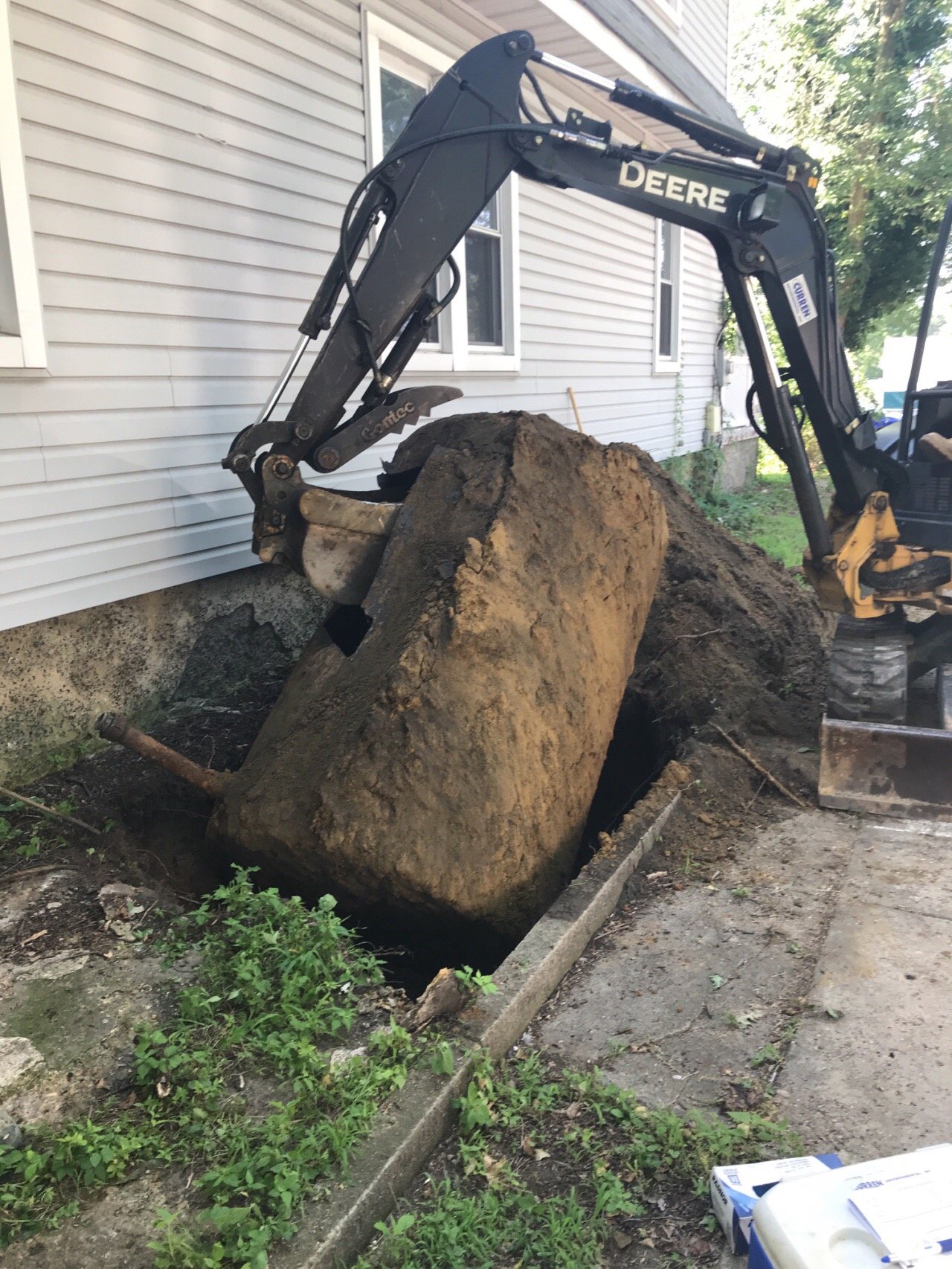
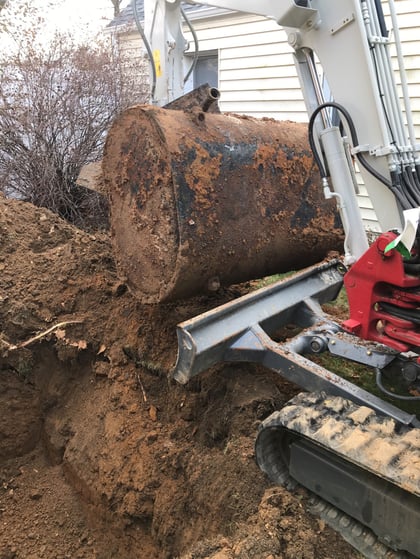
  • The tank in the photo was a basement tank, but was buried.  The tank was not rated (designed) for burial.  It leaked as the tank was not thick enough for the harsh environment of a buried tank.
  • 290 gallon tank AST was buried
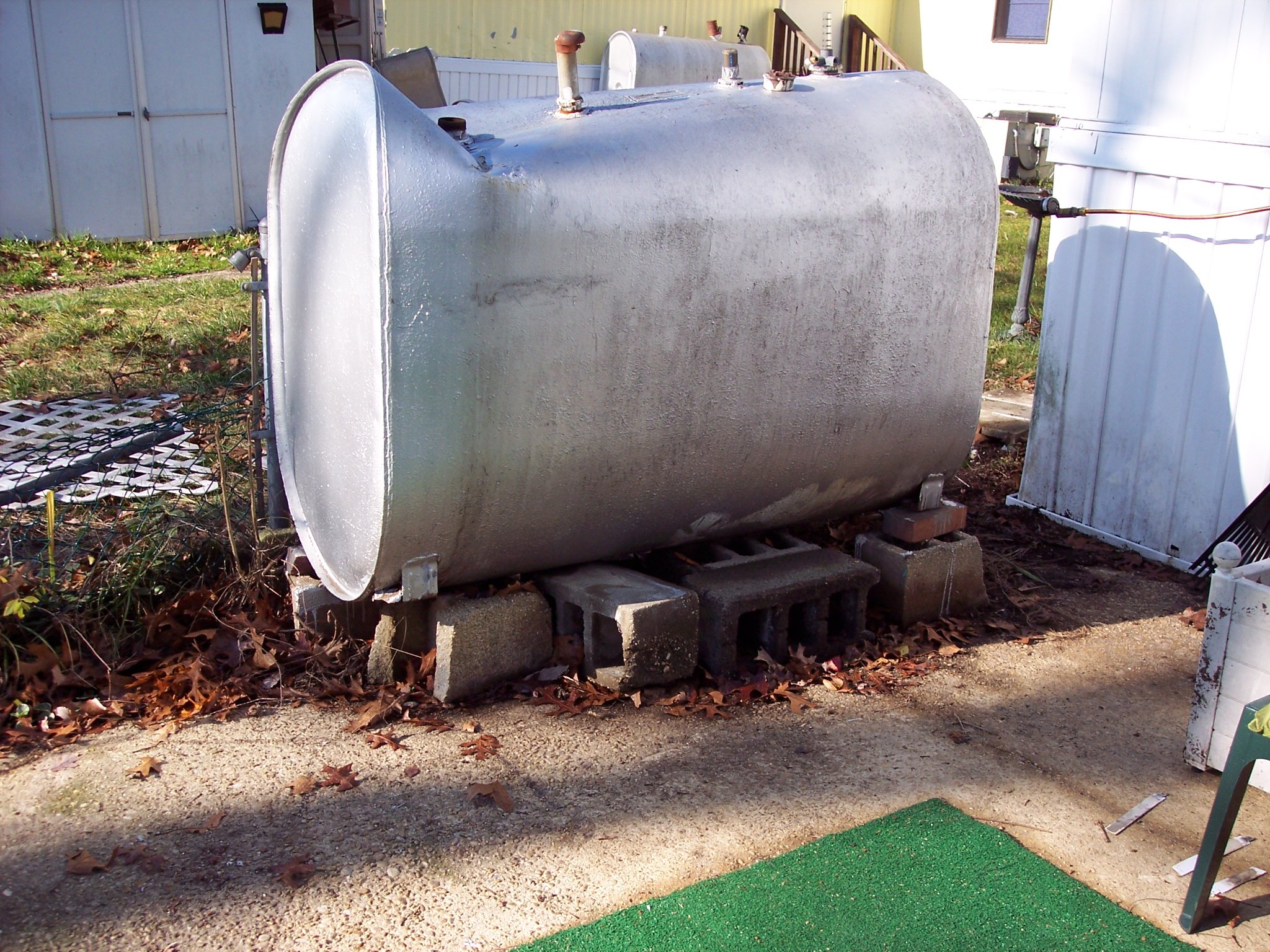
  • Improper oil tank installation.  Meaning the tank was not designed for the current use.  We have found indoor oil tanks that were moved outside and placed onto the underground in the soil surface below a deck, and then partially to half buried. What is this tank, an underground tank or an aboveground tank?  (The government definition of a UST is one where 10% or more of the tank is buried below ground.) These tanks were not rated for outdoor use at all and are at extra risk of leakage due to placement of the tank body directly in contact with the soil.
  • damaged in use AST
  • Improper oil storage tank supports, such as failure to keep the outdoor tank off of the ground, to install it at the proper pitch and direction of pitch, and to install it on level surface, unsecured legs of the tank can lead to the tank tipping over, ripping open an oil line, and obvious discharge of oil from the tank.   This is more common with out-of-service tanks.

Want information on tank removal? Clock here Oil Tank Removal

Read More

Green Lawn Tips

Mar 3, 2018 9:01:00 AM / by David C Sulock

0 Comments

Green Lawn Tips

Americans spend over $6.4 Billion a year on lawn care, according to the Professional Lawn Care Association of America. Why not get started in the spring to ensure a beautiful green and healthy lawn.

Start out by checking the soil pH levels. Winter can alter the soil pH and create conditions that are friendly to weeds and disease. The soils pH should read between 6.5 and 7.0 which are slightly acidic. You can test your soils pH by purchasing a pH tester. After the soil has been checked, invest in a rental aerator. In high traffic areas grass becomes compacted. The aerator will draw wine cork-sized plugs out of the lawn surface giving roots the room to spread and allow for air, nutrients and moisture to penetrate the soil.

Green_lawn

Pro Tip

The soil cores should not be raked always, as they contain bacteria and nutrients that will return to the soil.

In the early spring, apply a pre-emergent weed control to prevent crabgrass in early spring.

Pro Tip

½ the dosage of preemergent and reapply in 3 weeks to increase the treatment duration. Try to get your immediate neighbors to do the same so you encompass a larger spread of weed control. If your neighbor does not apply preemergent, weeds can grow and move to your yard.

During late spring fix any patchy places and apply your seed. When seeding in the spring it is pertinent that you provide consistent watering to allow the seed to germinate

Pro Tip

Water twice a day for 7 to 10 days to allow the seed to germinate.

When watering, make sure one inch of water to 12 inches of soil is preferred ratio for watering actively growing grass. You most likely will have to seed again in the fall months.

With the spring upon us, it is very important to prepare your lawn for the warmer, sunnier months ahead. Having a nice, thick green lawn helps with excess rain, capturing the moisture so it does not end up in your house to produce mold.

Read More

What is Mold and why is it not black or toxic Mold.

Feb 21, 2018 6:00:00 AM / by David C Sulock posted in mold, mold remediation, mold cleanup

0 Comments


What is mold and is mold dangerous?   Two common questions regarding mold.  First let’s start with "What is mold?". Mold is ubiquitous in our environment.  There are few places on earth, where molds are not present.  That said, mold (which is also called fungi) is a broad-spectrum term to describe fungi, mushrooms, rusts, mildew, and yeast. As humans, we simply complex things by using the term “mold”. Any mold is a eukaryotic organism, meaning one that has a defined nucleus.  Molds lack flagella and reproduce by means of spores. Spores are released from the mature mold body and spread by air currents on people, animals, and/or materials that travel from place to place. These spores can remain viable for extended periods of time, which, in short, is as long as it takes for a suitable environment to occur which allows the mold to form new colonies.

What is Black Mold? What is toxic Mold.

The next two most common questions. First, black mold is not a mold it is a color, the term was made up by the media. There is no mold that has the scientific name as black mold. The same goes for toxic mold, we think the name toxic mold came from the mold industry to scare people. Again no mold has the scientific name toxic mold.

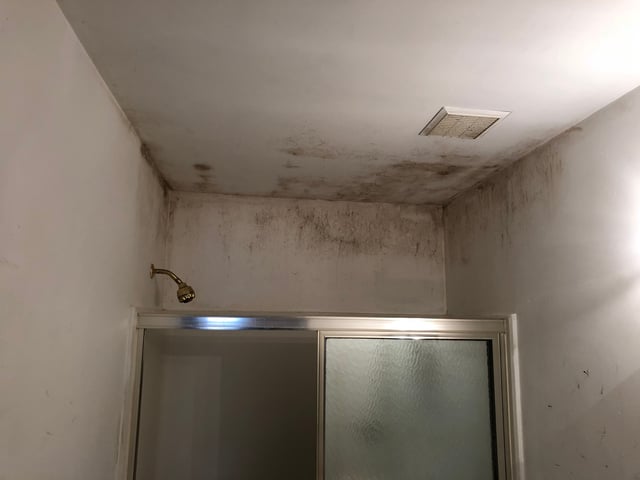
bathroom mold-1.jpg


Molds are fungi that grow in the form of multicellular filaments called hyphae that spread to form a network or colony called mycelium. When you see visible mold (spotting, staining, discoloration) you are observing a colony of mold. Most all fungi require oxygen to survive and all fungi need an organic food source.   Unlike humans, molds do not ingest their food but rather absorb nutrients by attacking dead organic matter or parasitizing living organisms. In an outdoor environment you can think of molds as nature’s composers as many molds live in the soil and are active in the decomposition of organic matter.

1-888-301-1050
Molds are not strictly confined to the outside, although that is their primary habitat.  Molds can grow indoors in a built environment (built being man made structure).  Molds can grow anywhere if the following four primary conditions are satisfied:

  1. Mold spores must first be present in the area.
  2. Food source such as wood, drywall, the paper part of insulation, skin cell fragments, cardboard, carpet, paper, etc.
  3. Appropriate temperature – this is a variable as molds can grow dormant when the temperature is out of range for required growth and then when the temperature is within range mold will grow.  (Think grass growing in summer and growing dormant in winter)
  4. Water or Moisture – if mold was a building, water/moisture would be the foundation, without it, you will not have molds growing and it is the one of the four conditions that can be controlled. Bottom line, if you have mold you have a moisture issue. 
  5. Moisture sources in a built environment are most commonly brought on from water and/or sewer leaks, moisture intrusion (rain) through walls and foundations.  In practice, moisture issues that fuel mold growth are associated with humidity or as condensation in HVAC systems. In terms of relative humidity, causing mold growth, is more of an intermittent issue that can occur at certain times of the year.   Damp, wet times of the year being more likely as opposed to winter when temperature may remove humidity.

    Both national and international health agencies agree that molds can cause health issues to varying degrees.   To the extent anyone is affected by molds relate to the types of molds, concentration, exposure duration and genetic factors of the individual.   There is no perfect fit that would say a certain person would be affected and this person would not.
Home Inspector-1.jpg


IMG_2645.jpg


IMG_4757.jpg


Mold affects humans through the inhalation of spores, which is how mold reproduces, so you should realize that when you see mold, spores are present and you could be at risk.  Molds also produce mycotoxins which are chemicals that are created during certain parts of the mold life cycle.  Mycotoxins having the word “toxic” in the name underlines them as a concern.  Mycotoxins can evoke a toxic response, for example, allergic reactions, respiratory irritation, the exacerbation of asthma symptoms as well as other respiratory reactions to an irritant.  Mycotoxins have this affect because they have very low volatility, meaning they have relatively low concentrations in the air, so contact or ingestion rather than inhalation is often the main route of exposure for these chemicals.
Since molds digest matter, they will naturally off gas.  The off gassing of mold often referred to as the musty odor is scientifically called MVOCs or microbial volatile organic compounds.  Their olfactory presence signifies actively growing mold. Fortunately for humans MVOC's have a very low odor threshold, thus, making them easily detectable by smell. Exposure to fungal MVOC's has been blamed for headaches, nasal irritation, dizziness, fatigue, and nausea.   So, while someone may refer to an odor as musty it signifies the presence of mold and compounds that are airborne that can have detrimental health effects in humans.
Chronic exposure to large airborne concentrations of fungal spores can induce allergy or hypersensitivity in certain individuals. In some cases, chronic exposure to fungal spores can result in a flu-like debilitating disease known as hypersensitivity pneumonitis.

Mold is confusing and the many unlicensed firms that perform mold work dont help to demystify mold.  At Curren will off a free initial consultation.  Call our office Monday to Friday 8:00am to 5:00pm EST and speak to one of our professionals.  888-301-1050.

Read More

                       Environmental Due Diligence

Jan 22, 2018 2:40:50 PM / by David C Sulock posted in Phase I, Due Diligence, Phase II

0 Comments


If you are purchasing a commercial property, you will be advised to perform reasonable due diligence prior to acquisition.  The standard is performing an ASTM Phase I Environmental Site Assessment (ESA).     A Phase I incorporates research of a site for the determination of past (historical) or current Recognized Environmental Conditions (RECs) that could affect the value of the property.  Banks typically will require a Phase I for high-risk sites or when loan amounts reach a certain threshold.  Banks typically have buyers pay for a Phase I to protect the bank, as the bank does not want to have a mortgagee be burdened with undue environmental remediation expenses that could in turn affect their ability to pay the mortgage.
Commercial due diligence.jpg

 Any purchaser of commercial real estate is performing Phase I due diligence to protect their interest, not is once again not typically fulfilling a requirement of the law.  Due diligence is a prudent practice to follow for any commercial purchaser.   Many buyers contact our office with little to no real knowledge of what a Phase I is and are being directed to perform one by their attorney or realtor.  Many people view a Phase I as getting their hand stamped and the quicker the better so the transaction can go to settlement.  The due diligence aspect is many times an afterthought.

We are going to cover the different scenarios when a Phase I is completed and when a Phase II or III is triggered and why that is a good thing.

tank buried under building.jpg

The best possible outcome for all parties after completing a Phase I, in the eyes of a buyer or seller is that the Phase I finds no issues with the site and accordingly there are no recommendations that any additional work is required such as a Phase II or Phase III.   This is not as common an outcome as many people think or expect.  Sellers do not want you to complete a Phase I as it delays the settlement and opens up the possibility that the Phase I may find an issue.   Buyers do not want a Phase I performed for the same reasons, citing the time it took to find the perfect site at the right price as well as monies already spent to date.  The Phase I is viewed as a necessary evil and one that at best could cost money and delay the sale from 2 to 6 weeks and at worst strike a crushing blow to the sale when a problem is uncovered that the owner was unaware of and unable or unwilling to address.

The odds that the Phase I will come back clean, meaning no RECs are found, is based on numerous factors including the date of site development and historical usage of the site.  We have found that some of the most innocuous appearing sites (upholstery and insurance office), have been found to have potential environmental concerns from PRIOR usage.

Picture 014.jpg

A common Phase I situation is a client that is not required to perform a Phase I by the bank either because the loan amount is not triggering it or they are paying cash or there is a 1031 exchange.  These are rush hand stamped Phase I’s as there are already planned deadlines and the Phase I request is coming from the buyers attorney.  The rush part of the Phase I need is not based on anything pertinent relative to environmental conditions, but rather business or financial needs.   This is where hand stamping is most common.   Timing is relative and the sooner a decision is made on performing the Phase I the faster it will be completed.  In a perfect world a Phase I would be initiated by the seller prior to listing the property for sale.  In practice, it is one of the last things a buyer completes.

Time necessary to complete a Phase I varies.  Most Phase I’s are completed within three weeks, some can take as long as 6 to 8 weeks.  The difference in timing is based on the presence of records at the State and local levels.  The presence of files for a site at an environmental agency is typically unknown until a Phase I is initiated and the agencies are contacted regarding any files.  If files are found, the review of reasonably ascertainable files is required.  There could be a multiple week wait to get access to these files as they may be in storage or the first available date the State gives is 4 weeks away.   The time to access environmental files at a State level is the under looked aspect of a Phase I.  The determination that no files exist allows the Phase I process to be expedited.  The presence of environmentally-associated records indicates that investigation/remediation work may have been initiated or completed.  Records must be reviewed by a person with the experience and knowledge of applicable regulations to confirm that investigations/remediation has been completed in accordance with the local, State and Federal regulations.  A recent Phase I had pertinent files that were at the State.  Based on ability to accumulate the records and schedule the first available review date, it took five weeks to just perform a cursory review.  The review found that the site was formerly a gas station and had gas tanks removed and properly closed though the State.  What the file review did not indicate was the presence of other tanks on the site that appeared to have been either removed or left in place.  The unknown tanks consisted of a heating oil, waste oil and kerosene tank.   This triggered the need for a Ground Penetrating Radar (GPR) survey of the site to search for the possible missing tanks.  In this case, the buyer was sure that all the tanks were removed and signed off by the State, unfortunately that was not the case.  In this case, the buyer did not buy the site and the owner had more work to complete including the removal of the tanks.

Questions?  null

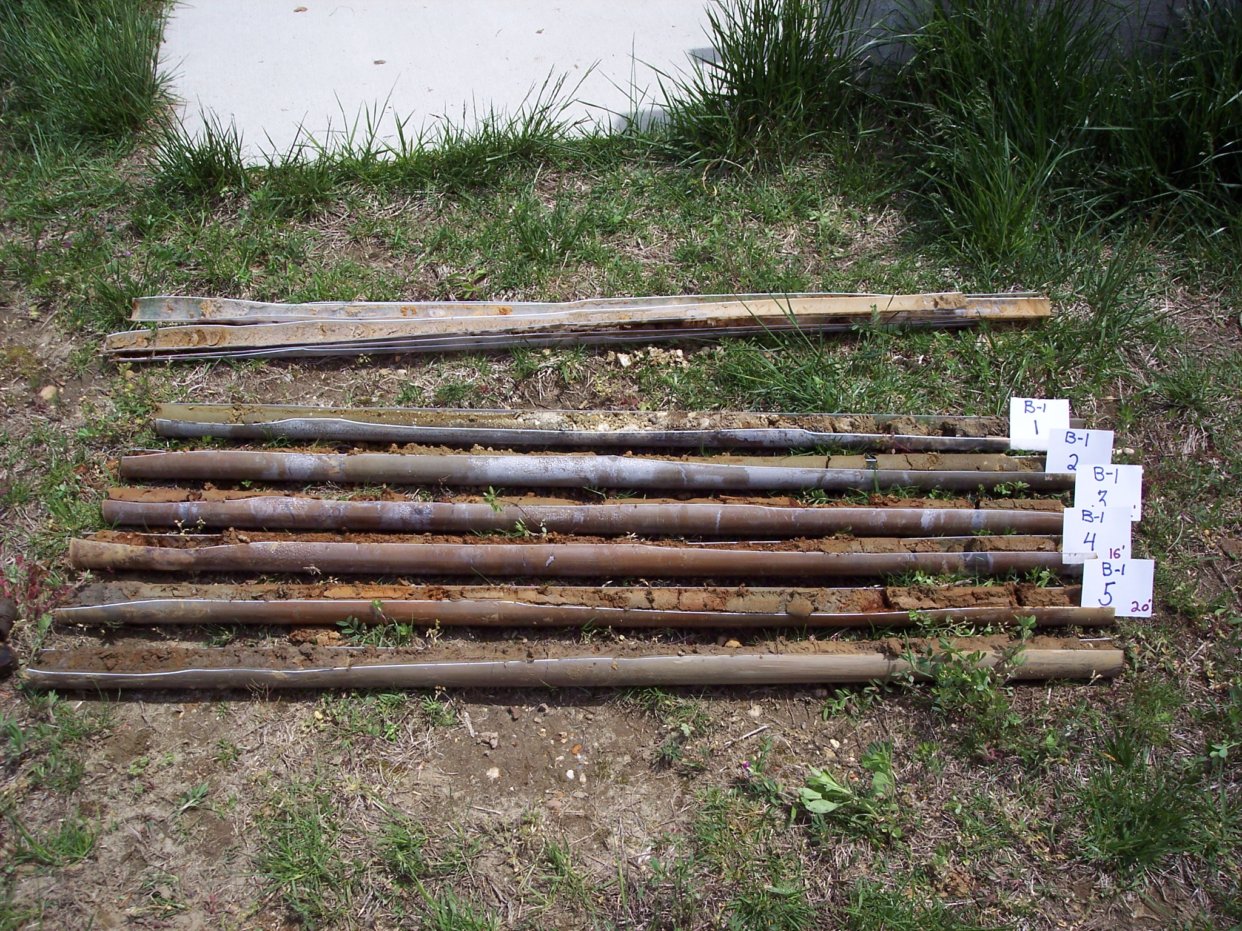
When you start a Phase I, anticipate that a Phase II may be the necessary.  A Phase II is testing or further invasive evaluation of a suspected environmental concern.   Another Phase I performed found the need to complete soil borings on the site in areas where the operations of the site may have allowed historical seepage of oils and chemicals into the soil.  The Phase II did indeed find contamination in all the borings completed.   At this point the purchaser was into the property for over 20K, which including attorney’s fees, zoning applications, engineering and environmental.  The next step after finding an area of contamination is to determine the extent of contamination and the associated costs for remediation.  This added weeks upon weeks to the financial deal which could lead to the potential purchaser to look for another property weighed against the monies spent to date.  Most contracts allow the buyer or seller to back out of the transaction if repair expenses exceed a dollar amount or a time limit.   Usually at this point the buyer, thinking they were buying a clean site, is upset about monies thrown down the drain and when the end will occur.   Rarely does the purchaser weigh the fact that the Phase I did exactly what it was designed to do which is evaluate for potential environmental issues that could devalue the site.   Slightly less than $100,000.00, later and almost 7 months from the start of the Phase I was the property cleaned up.  The buyer dodged a remediation expense that surely would have been in their lap if the property was bought without a Phase I as the party they sell too would most likely not be as foolish to purchase without performing Due Diligence.

The photo below is a drum storage area, the floor below the wood was heavily stained.  It was flagged in the Phase I as an AOC and testing was recommended and the testing found contamination.

IMG_6363.jpg


Phase I cost sharing.  Due to the unexpected outcome of any Phase I’s in some instances the expense of the Phase I is shared between buyers and sellers.  The advantage for both parties it not just financial (50/50 split), but ownership of the report.  If the transaction falls apart for reasons other than environmental finds issues, the owner has possession of the report and can share same with the next prospective purchaser.

tank removal.jpg

Phase II cost sharing is more complicated.  The Phase II by definition involves physical examinations and in many cases testing.  Phases II expenses can dwarf the cost of a Phase II and due to the potential of finding an issue, many sellers would prefer the testing not be performed.  This is particularly common when the issues being investigated relate to potential conditions that predate the current owner.  This is a very common situation if the current owner purchased the site in the last 20 years and did not perform a Phase I.  Cost sharing is again valuable as the owner has rights to the report and data generated by the Phase II.   In most cases if the Phase II finds an issue that must be addressed or remediated (Phase III) the phase II has to be shared with the owner to document the findings.   Phase I cost sharing is far more common than in Phase II situation.

Read More

Oil Tank Insurance

Jan 16, 2018 10:46:11 AM / by David C Sulock

0 Comments

A bill has been proposed in the New Jersey assembly that will require all homeowner carriers to offer coverage to remove residential USTs (Underground Storage Tanks) and to cover remediation. Assembly bill, No. A437 would require the insurer to get written confirmation from the insured that they are declining the coverage.

What this would mean for homeowner's is that coverage could be obtained for tank removals and remediation.

Heating OIi tank removal - NJ

The bill as proposed is as follows:

A437 SCHAER, BRAMNICK 2

AN ACT concerning homeowners insurance coverage and 1

supplementing Title 17 of the Revised Statutes. 2

3

BE IT ENACTED by the Senate and General Assembly of the State 4

of New Jersey: 5

6

1. a. Every insurer authorized to transact the business of 7

homeowners insurance in this State shall make available as an 8

option for purchase, in every homeowners insurance policy 9

delivered, issued, executed, or renewed in this State on or after the 10

effective date of this act, coverage for: 11

(1) removal of a leaking heating oil tank from the homeowner’s 12

property; and 13

(2) remediation of damage caused by the discharge of heating 14

oil from the homeowner’s leaking tank or any piping, fuel supply 15

line, equipment or system connected to the tank to: 16

(a) the homeowner’s property, including any impact on soil, 17

indoor air, groundwater or surface water; and 18

(b) a third party’s property, including but not limited to nearby 19

or adjoining property, or groundwater or surface water. 20

b. The commissioner shall establish by regulation the amounts 21

of coverage per occurrence and the amounts of any deductible per 22

claim or policy period for policies offered pursuant to this section. 23

c. If a homeowner declines the option to purchase coverage 24

offered pursuant to subsections a. and b. of this section, the insurer 25

shall obtain a written waiver of the coverage, signed by the 26

homeowner, whose signature shall be notarized by a notary public. 27

d. For purposes of this act, “heating oil tank” means a liquid 28

fuel tank in which heating oil is stored and from which heating oil 29

is delivered or pumped through a fuel supply line to an oil burner, 30

whether the tank is located within a dwelling or other structure, 31

underground, or outdoors. 32

e. This section shall not apply to abandoned, closed, or out of 33

service heating oil tanks. 34

35

2. This act shall take effect on the first day of the sixth month 36

next following the date of enactment. 37

38

39

STATEMENT 40

41

This bill requires homeowners insurance companies to make 42

available as an option for purchase, in every homeowners insurance 43

policy delivered, issued, executed, or renewed in this State on or 44

after the effective date of the bill, coverage for certain leaking 45

heating oil tanks. 46

The bill requires that this coverage be offered for: 47

A437 SCHAER, BRAMNICK 3


(1) removal of a leaking heating oil tank from the homeowner’s 1

property; and 2

(2) remediation of damage caused by the discharge of heating 3

oil from the homeowner’s leaking tank or any piping, fuel supply 4

line, equipment or system connected to the tank to: 5

 the homeowner’s property, including any impact on soil, 6

indoor air, groundwater or surface water; and 7

 a third party’s property, including but not limited to nearby 8

or adjoining property, or groundwater or surface water. 9

The bill also provides that the Commissioner of Banking and 10

Insurance establish by regulation the amounts of coverage per 11

occurrence and the amount of deductible per claim or policy period 12

for policies issued under the bill. 13

If a homeowner declines the option to purchase coverage offered 14

pursuant to this bill, the insurer shall obtain a written waiver of the 15

coverage signed by the homeowner whose signature shall be 16

notarized by a notary public. The bill shall not apply to abandoned, 17

closed, or out of service heating oil tanks.

Read More

Successful Oil Tank Removal - Avoid Tank Problems

Jun 6, 2017 9:57:36 AM / by David C Sulock posted in NJDEP oil tank removal grant, oil tank removal new jersey, tank removal, tank leak

1 Comment

Keep in mind that if have an oil tank you need removed, this will most likely be a he only time in your life you will ever have to deal with something like this.  Odds are against you making the best decision regarding removing the underground tank, which is why we have devised this handy tank removal reference guide.   The following information regarding tank removal are a cumulation of 20 years of tank removal experience and speaking to people who had their tank removed and their decision making regret.

Google oil tank leak and you will see some scary web pages. If you are selling a property with a tank and don't you think it's an issue, realize your buyers are reading these pages and they know an oil tank can be an issue.

New Jersey tank removal.jpg

 Here are important oil tank removal fact.

  1. Most oil tanks do not leak.
  2. Most oil tanks that leak do not require expensive remediation and can be addressed by testing.
  3. Every state allows a permissible amount of oil to remain in the ground.

Few if any tank removal firms will tell you these facts.

Tank removals while not cheap can cost between $1200.00 and $2,000.00 on average.  Remediation of leaking oil tanks can cost $10,000.00, $16,000.00, $40,000.00 dollars or more.  Do I have your attention?  Many firms will suck you in with a competitive price on tank removal and then whack you with a bill to remediate the leaking oil tank.   Many people call our office after their tank is removed and after they get an outrageous proposal to remediate.   These tank remediation quotes appear on the same day as tank removal or within a few days and are 90% of the time baseless money grabs.  

Google oil tank removal and you will see some slick web pages, not as scary by any means as the tank leak search. These pages have happy people, testimonials and some sales oriented content. You may be swayed by the nice web pages or even that the company is LOCAL.   Local has nothing to do with an oil tank removal, you probably have a few pizza shops close by and one is your favorite.  Proximity to your property is not like a pizza shop, good environmental companies are not known to be as popular as pizza shops.  Contract with these firms and if your tank has any remote evidence of leaking, you will regret your choice of contracting.  Here is why. 

I had no indication that my tank was leaking and the company I hired agreed.

Big, big trouble is brewing in this sentence.  I would hope that no one wishes ill will on anyone, but let us look at an oil tank leak as a possibility based on the following.

Oil tanks do not last forever and on average a tank lifespan is between 20 and 30 years.

Age of tank.   If your oil tank is the original oil tank for the house and it is older than 30 years, well it has outlasted the refrigerator, washer, dryer, roof, ect. It is most likely the oldest replaceable fixture in the dwelling that was NEVER REPLACED.   So can we agree there is a CHANCE the oil tank maybe leaking?  Just a chance.   If your answer is yes, well should a brief conversation occur about the oil tank leak scenario?  If yes, then the what if my oil tank leaks discussion should be written into your oil tank removal contract, so you know what steps will occur in the event of a leak.   Trust me the answer is yes and your proposal like so many we see will not have the language in there and you are setting yourself up for problems. 

 Soil samples.  You do not want them because soil sampling is not required by law, you do not want to test because you do not want to find a problem.  I mean who wants to go to the doctor, you know the doctor is going to find something wrong.  Soil sampling after a tank is removed is 100% important and not sampling is the biggest mistake you can make. 

Remember the google search for oil tank leak?   Well how are you going to certify the tank did not without testing?   Perhaps you think the township will inspect and certify the tank did not leak?  Wrong their job is a construction inspection, remember they are not licensed to remove an oil tank, the company you hired is licensed and they hold the burden to certify the work. 

leaking oil tank.jpg

How do we certify that a tank did not leak?  

Not by looking at it, believe it or not.  No one knows your cholesterol level without blood work, there are marathon runners that have heart disease, healthy looking people get cancer, my point is looks can be deceiving you cannot look at an oil tank and be 100% certain the tank did or did not leak.   Please do not tell me you will be able to tell if the tank leaked because you are going to look for black oil in the ground, because everyone knows that is how you can tell, WRONG.   The tank is not the Beverly hillbillies, heating oil is not black its dyed red.  (Google it, heating oil is red, no lie).

Back to soil testing, hey if you were buying a house with an oil tank that was removed, wouldn't you want testing completed and a report certifying the tank did not leak?  If you don't care, leave this web page, go play words with friends, understanding the pitfalls of oil tank removal are not your topic of interest. 

Soil testing protects you from unscrupulous tank removal firms that would remove your tank, show you a hole in the tank after removal, show this hole to the construction official, report you to the state and give you a cost to remediate, which is many times more expensive than the tank removal and more profitable for the removal company.


Here is the short story of a property where a tank was removed, the tank was found to be leaking and got a quote 

1.Oil tank was removed.

2.Property owner want soil testing.

3. Tank removal company says soil testing is a waste of money.

4. Tank removal company has X-ray vision and can just tell that the tank leak is bad and you need remediation, why test?

5. Owner is told testing is expensive, $5,000.00, true story, owner was told why spend the money to test if you know it leaked?

6. Truth, testing of an oil tank, say a 275 to 550 gallon oil tank would cost under $250.00!  Think that money is worth spending?

7. Owner was given a quote to remediate a day after removal.  

At this step in the tank removal, the ownerr felt something did not add up.  Owner brought in another company to test the removed tank area.   Yes contamination was found, but it was with acceptable standards.  

Success tank removal depends on testing, if you test, you could save thousands in unnecessary oil tank remediation.

If you don't test the soil after a tank is removed, the removal company can quote you an expensive remediation, good for them, not for you.

Why are we posting oil tank removal problems, showing you how to be a better consumer of these services, well we remove tanks but we also help people who had their tank removed and we are repeating their stories for your education.   Unethical tank removal firms give all companies a bad name.   To be frank as well, we get a little tired of hearing the same story over and over again.

 Common compliants after a tank is removed?

My oil tank contract was based on the tank not leaking.  It leaked and I am getting billed alot more than the cost of the removal.

My tank had holes when it was removed and I have to remediate.

My leak was reported to the NJDEP AND NOW I HAVE A CASE NMBER.

The removal company said testing wasn't in my contract so they didn't test.

The removal company said testing was a waste of money and I have to remediate.

Environmental company gives a 10k quote to remediate, my house is under contract for sale and I have to clean up the leak or risk losing the buyer.


We have been involved with more projects than I care to count that fits those details. Sit down before I tell you what we find at these sites.

Close to 80% of the time, we find little to no oil in the ground or we find that oil levels are within acceptable levels, meaning no expensive remediation.

The other 20% of the time, well yes, remediation was necessary but sadly, not to the extent they were quoted.

 Do you have questions we didnt answer?   Common oil tank question and answer can be found at Residential Heating Oil Underground Storage Tanks (USTs) Frequently Asked Questions (FAQs)

 Want to speak to a live person call up MOnday to FRiday 8:00 am to 5:30 pm Esatern Standard time at 856-858-9509

Read More

It's Opening Day for Mosquitoes...

May 25, 2017 6:29:28 PM / by David C Sulock

0 Comments

Memorial Day marks an official start of summer with a three-day weekend and a guaranteed opportunity to be outside. It is also an opening for mosquitoes to feed, and the longer you are outside the more likely this will occur, particularly in the early mornings and evenings. 

In today world where speakers talk back and cell phones allow a constant connection to information, people are becoming less tolerant to inconvenience and mosquitoes tops the list this time of year.    People are becoming more used to hearing about Mosquito Remediation as a service they can rely on to take back their yards.

Mosquito remediation, mosquito extermination or mosquito control are all descriptions on the management of these pests.   Science has allowed us too safely and effectively reduce the mosquito population in a given area by utilizing barrier sprays that help knockdown current populations and lower future population growth.   These sprays are proven to help keep you outside without the bothersome biting.

IMG_3838.jpg

Mosquito control (mosquito remediation) barrier sprays outperform the tradition of masking your scent that is attempted with citronella candles, garlic spray, scented oils and flowers meant to ward off mosquitoes.   By applying a barrier to your surroundings as opposed to your person (have you ever read the warning label on DEET containing lotions?) you stop the mosquitoes before they bite.

In today's environment, backyards are considered an extension of the house and people want to be comfortable wherever they are.  The familiar pain and itch after being bitten by a mosquito is an annoying part of being outside and drives many people indoors or even to apply chemicals to their person to ward off mosquitoes.

Mornings and evenings when the temperatures are cooler are those times that mosquitoes come out to pray.   Mosquitoes, due to their size (a whopping 2 millimeters), dislike the heat of the day  (the Asian tiger mosquito is the exception) and stay out of the sun or else they could bake and dry out. Mosquitoes are engineered to reproduce at large quantities, with the female being the only one that actually bites.  Females need blood to lay their eggs, your blood, and the blood from dogs, cats, any blood helps these females reproduce.  These blood meals are also what makes mosquitoes a vector of disease -  as a mosquito will feed off several hosts (you,  your friend, even the friend of the friend you don’t even know) for a blood meal increasing the chance of transmitting disease which each person bitten.How do you combat mosquitoes?  Mosquito control or in the industry mosquito remediation is how you  manage mosquitoes. 

Mosquito remediation, mosquito extermination or mosquito control are all descriptions on the management of these pests.   Science has allowed us too safely and effectively reduce the mosquito population in a given area by utilizing barrier sprays that help knockdown current populations and lower future population growth.   These sprays are proven to help keep you outside without the bothersome biting.                     Shed.jpg

Years of remediation experience has helped Curren Environmental utilize the principals of soil an groundwater remediation to mosquito remediation. Like any successful approach you must apply the solution to appropriately to be effective.  This means applying a micro encapsulated barrier spray (low dose, think teaspoon) insecticide with copious amounts of water applied via a precision misting blower to areas where mosquitoes go and humans do not.  

The secret is in the sauce.  The micro encapsulated formula makes water wetter and allows a broad-spectrum coating to be applied to knockdown mosquitoes and provide long-term (3-week) effectiveness until the next application is performed.

Don’t be scared out of your back yard by mosquitoes this summer season.  Control and knockdown mosquitoes by using mosquito remediation.  Learn more with Curren Environmental and enjoy your yard this memorial day and throughout the summer and into the fall seasons.

#mosquitor Remediation.jpg


Read More

Tank Scans & Tank Sweeps

Apr 4, 2017 9:10:00 AM / by David C Sulock

8 Comments

Oil Tank Sweeps,  Tank Scans, GPR, Ground Penetrating Radar


The liability associated Underground Heating Oil Tanks (USTs) is fairly well known to most buyers and sellers nowadays, but our office still gets calls regarding why a tank scan should be performed.   We explain that historically home heating oil has been stored in Underground Storage Tanks (UST’s). Homes built in the early 1900’s to around the mid 1990’s are most likely at risk to having a buried oil tank.  When tanks leak, homeowners can face environmental regulations originally written with businesses in mind, not residential homeowners.  Property owners can face cleanup costs in the thousands of dollars, and find their homes difficult to sell, because banks and mortgage loan companies do not make mortgages on properties with abandoned, untested tanks.  Rust never sleeps and Underground Oil Tanks will not last forever.


why tank sweeps are so important.

The laws are set that when you own a property you own the problem, the courts have ruled that a current residential property owner with a leaking underground storage tank that was decommissioned or "closed" prior to the property’s purchase is now liable for cleanup costs. The residential real estate market must conduct their due diligence to include inquiry regarding underground storage tanks. You buy the property you buy the problem.


Tank Sweep Questions?

 An oil tank sweep is like a home inspection but is specific to one thing, finding an "undisclosed" buried oil tank. Tank sweeps are becoming more common in the real estate sales process.  Today both sellers and buyers are having tank sweeps performed due to the large concern over leaking tanks.  All anyone has to do is google "oil tank leak" and you will find a plethora of scary web pages, photos and horror stories of tanks leaking and the expensive headache filled experience that ensues.

The internet has made everyone more informed regarding topics that were once only known to professionals.   People now know that when you buy a property you buy the good and the bad with a home.   Good school system, check, safe neighborhood, check, oil tank leak and associated cleanup, check.   You buy a property and don't perform due diligence, you are at fault and responsible for imperfections and repairs to a property.

GPR scan is the best tank sweep 

So what is a tank sweep? 

There are two types with disparate costs and variable results.

First and most basic is a sweep performed with a metal detector.  These sweeps utilize metal detector that can cost only a thousand dollars and yet the charges to perform a tank sweep with a metal detector range anywhere from $50.00 up to $250.00.   Their low cost is based on the low quality of the sweep and the low cost of the equipment involved.   Metal detector tank sweeps are typically hand stamping a transaction that a tank probable isn't present.   These sweeps while on the surface make sense (buried metal, metal detector should find something), they are a needle in a hay stack.   Geology on any property will have some amount of metal (ferrous metal deposits) naturally occurring, as well as from the development of the site (we have found screws, nails, license plates, buried metal trash..  Buried metal can include buried pipes that service or serviced the property including electric lines, water, sewer, drains, as well as surface metal such as fences, metal used in the home (most tanks are close to the house).   Concrete sidewalks, driveways and patios can have wire mesh or metal rebar in the concrete that can set off a metal detector and give false positives.  All this buried metal is competing for the attention of the metal detector and can give a background reading and can mask the actual tank when encountered. This happens by the buried metal fooling individuals performing a tank sweep to adjust the sensitive of the metal detector due to the detector constantly spiking (beeping) from the background metal on a site.  Therefore, while a metal detector sounds fool proof it is the more foolish of the two options. 

888-301-1050
The photo below has a 1000 gallon tank outlined on the ends in red paint.  This tank was missed by a meta detector, because there is a metal railing that runs across the area, so the metal detector gave a signal across this area.  The signal died just to the left of the picture, right where the tanks and railing ends.   Makes sense how a metal detector would be useless in this area.
Best tank scans and tank sweeps

The second type of tank sweep and much more throughout (also used on commercial properties) utilizes GPR or ground penetrating radar.   These scans range in costs that are comparable to a home inspection, but utilize specialized equipment costing tens of thousands of dollars.  GPR is not fooled by buried debris as it utilizes radar as a detection method. Like sonar, radar sends a signal into the ground.  This radar signal can't penetrate buried objects with density such as metal tanks and accordingly when radar finds a tank, the signal is reflected back to the surface where a screen reads a graphical interpretation of the objects.  The signal is best described as a pyramid reflection.  Pipes return a small pyramid; tanks return a bigger pyramid.

buried oil tank GPR tank sweep

If you want to get more technical, GPR radiates short pulses of high-frequency EM energy into the ground from a transmitting antenna.  When the EM energy (wave) encounters the interface of two materials having different properties, a portion of the energy is reflected back to the surface. Buried Oil tanks or metal pipes reflect the EM signal back to the surface, indicating a found buried object.   If the signal does not encounter a buried object the EM signals goes deeper into the ground indicating no object found.  The difference between these two readings is what allows a GPR technician to determine a buried object from normal soils. The radar can go through concrete and asphalt.

best tank sweep Curren Environmental


abandoned oil tank found via GPR

Tank sweeps with GPR

So why hire a company like Curren to do a GPR tank scan?  First, we provide turnkey solutions including tank locating, removal testing and remediation. 


You want to be good with locating buried tanks? 

Buy a half million dollars' worth of equipment.

Get regulatory licenses to remove tanks in multiple states (DE, PA & NJ)

Remove tens of thousands of tanks.

Then you get pretty good.

Tank Scans & Tank Sweeps

Our technicians have been involved with tank removal, so they are familiar with the various ways a tank system is constructed and thus know what to look for when performing a tank sweep.  When you hire a firm with over 25 years of service experience, you are dealing with a firm that has helped thousands of clients. Our repeat customers and referral network is large and a testament to the quality of our service.

Curren completes tank scans with equipment costing tens of thousands of dollars.  The least expensive and reliable are metal detectors.  If you did not know, 85% of oil tanks are within a few feet of the foundation of a house.  Houses have metal, underground pipes have metals, buried metal can be found naturally and by man on any property.  These smaller metal signatures can confuse a metal detector and provide false readings, both when a tank is and is not present.   GPR does not have these limitations. 


buried Tank Scans & Tank SweepsTank sweep NJ DE PA

Curren Environmental has over 25years’ experience with tanks and all work is performed in house and by company personnel, this ensures both timely execution of projects as well as cost savings by avoiding subcontracting.  Curren is licensed by the New Jersey Department of Environmental Protection (NJDEP), Pennsylvania Department of Environmental Protection (PADEP) and Delaware Department of Natural Resources and Environmental Control (DNREC).

tank sweeps with GPR


Tank Sweep Questions?


Read More

Inheriting Environmental Problem

Feb 16, 2017 9:38:00 AM / by David C Sulock posted in Estate

0 Comments

Is there an Environmental Issue with your Inherited property?

It always sounds good an inherited property.  You can reap the benefits by keeping the property as your home or selling the property to cash out.  What does not sound good is if this inherited property has an underground oil tank and to top that off, the oil tank leaked.  When you inherit a property, you may be inheriting a property that can be easily sold or holds years of headaches, potential lawsuits and a financial black hole.  How can you protect yourself, first hire an attorney with experience in estates, real estate and environmental issues.  Do not disburse liquid assets in the estate as monies that are available may be needed to manage the property in the form of taxes, utilities, inspections and potential repairs are upgrades requested by a purchaser.   If you have already accepted the inheritance than you just inherited, the problem and you should seek an environmental consultant and an environmental attorney.  The laws state that whoever owns the property owns the problem.  You may choose to do nothing about the oil tank, which can deterr potential purchasers of the property as they may not be able to get a mortgage or insurance with the tank in question.

What should you do before inheriting a property?

First, know that you are not required to accept the inheritance.  You also have the right to have an inspection on the property such a structural review, home inspection, mold inspection and a tank sweep to name a few.  While you are inheriting and not buying the property the adage, buyer beware is still relevant. In cases where you are bequeathed separate items, such as items, cars, cash, stock and jewelry, you can accept one and not the other i.e., you can cherry pick.    You do not have that same luxury as non-liquid assets such as real estate. You cannot take only a part of piece of property.  

Hire an experienced Attorney and Environmental Consultant.

When inheriting a property, be it residential or commercial, you should first consult with an attorney.  Attorneys will advise you regarding Proper Due Diligence prior to acquisition of the property.  Older dilapidated properties as well as newer move in condition properties may have environmental isssues.  The property may have hidden mold (or visble for that manner in an area you are not frequenting like an attic, crawl space, ect.  There may also be there is an underground oil tank or undocumented removed tank. If either mold or tanks are unknown, you need to hire an environmental consultant.  If there is any chance that there was or may still be an oil tank on the property a tank scan should be performed.  A tank scan consists of taking measures to properly scan the property for an oil tank.  The property should be scanned with a Ground Penetrating Radar system.  This system uses a series of radar wave pulses that are directed below ground.  When a solid object is encountered such as a metal tank, the waves are reflected back to the surface with a distinct signature. GPR tends to be more reliable , than a metal detector, as metal detectors are not discriminating and will pick up naturally occurring metal in the ground, metal from buried pipes, metal in the house, fences ect.   The best approach is GPR with a metal detector verification.  If this property is a commercial property you should perform a Phase I, for more information on Phase I click here.

 823 Marlow Collage.jpg

Did the property have an Underground Oil Tank?

Find out first if there was ever an oil tank located at the property. If the dwelling is older than 1940 or was built in 1940 to 1985, there is a high possibility of an underground oil tank.  Older homes in regards to heat sources started out with wood or coal then moved to oil heating.  Also, 9 times out of 10 if there is an above ground oil tank there probably was an underground oil tank.  You may check with the borough to find out if a permit was provided to take the underground oil tank out of the ground.  But, that permit does not answer the question if the oil tank leaked.  The only answer the permit allows is that there was an underground oil tank and that tank was taken out of the ground.  The borough does not test the soil for any leak from the tank, not do they require it.  Tank removal is a construction activity, tank leaking is environmental and is handled on a state level, not on a local level.

If you do find out that there was an underground oil tank and that said tank was taken from the ground, that environmental company may have taken soil samples to make sure there was no leak.  That environmental company would hopefully, have given the property owner a report on the soil samples and if the tank leaked or did not leak.

If you have no records of any soil samples or soil testing that it is advised to get soil samples done. First you would check the soil for any contamination. In the New Jersey there are regulations of how much contamination can be in located in the soil.  If there is contamination, there may be a need to test the groundwater as well. 

Pertaining to mold, while it is ubiquitous and needed in an ecosystem (it is grass, leaves, mulch, soil), when found inside it is indoor air pollution and a health concern.   Mold needs moisture to grow, which can be supplied not just from water leaks, but also from improper ventilation or lack thereof in a structure.   Mold means you have a water issue, meaning you not only have to remediate the mold but also fix the root cause of the moisture that fuels the growth.  Mold inspections can include visual walking inspections of a site and can include sampling inside to evaluate for hidden mold.  Mold is becoming more and more of a hot issue with homebuyers and must be considered as part of an evaluation before you take possession of a property.

After your due diligence, which can include testing and remediation and review of the findings with your attorney, you will be better prepared in the decision to accept the inherited property.  Remember the estate can pay for these inspections and repairs prior to you acquiring the property. It is also important to consider that long term you will probably sell the property, and when that occurs the buyer will do their due diligence which can include the afore referenced inspections.  Better to ferret out the issues before you own the property.


Read More

Subscribe to Email Updates

Lists by Topic

see all

Posts by Topic

see all

Recent Posts