
EPA Implements New Lead Dust Standards, which Take Effect January 12, 2026.
Lead is a neurotoxin that can irreversibly harm brain development in children, lower IQ, cause behavioral problems, and lead to lifelong health effects. It also affects other organs, including the liver and kidneys.
Because Lead is so harmful, the EPA has lowered the standard to be more protective of human health.
- Dust-lead hazard standards (DLHS): Testing is required for any reportable levels of lead
- Dust-lead clearance levels (DLCL):
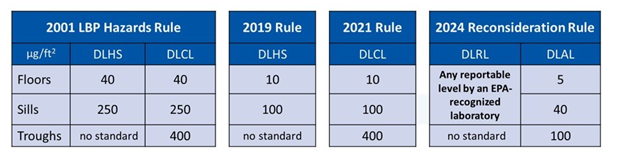
- The new levels are 5 µg/ft2 for floor dust
- 40 µg/ft2 for windowsill sill dust
- 100 µg/ft2 for window troughs
The rule changes the game on lead in the following ways:
Increased Lead Abatement Needs:
Lead abatement contractors must meet stricter cleanliness standards after renovation or abatement activities, requiring more thorough cleaning.
Key Definition Changes:
The rule replaces "dust-lead hazard standards" with "dust-lead reportable levels" and "dust-lead clearance levels" with "dust-lead action levels".
Real Estate Mandatory Disclosure:
If a test shows levels above the new threshold, it is considered a lead hazard, which must be disclosed to potential tenants or buyers.
The rule reduces the level is allowed when a lead-abatement contractor finishes work on a property where lead has been identified as a problem. These levels would be 5 micrograms per square foot on the floor and 40 micrograms per square foot for sills.
Pertaining to the New Jersey Lead Safe Law, dust wipe towns will have to meet the new standards. Sites that fail the visual inspection have to perform a dust wipe after the hazard is addressed and meet the new standards.
New Jersey has until January 11, 2027, to utilize the new stricter standard. Landlords subject to the law must be more vigilant in property maintenance. Many sites that passed previously have avea high probability of failure under the new standard.

As the following chart shows levels have dropped by ½ on some surfaces.
Property owners, lead-based paint professionals and government agencies may identify dust-lead hazards in residential and childcare facilities built before 1978 after learning that a child living there has a high blood lead level, or because of requirements for housing receiving federal funding, among other reasons. If lead abatement is needed, EPA’s
Lead Background
Although the federal government banned lead-based paint for residential use in 1978, it is estimated that 31 million pre-1978 houses still contain lead-based paint, and 3.8 million of them have one or more children under the age of six living there. Lead-contaminated dust is one of the most common causes of elevated blood lead levels in children, and even low levels of exposure can be harmful. Lead dust commonly results when lead-based paint deteriorates or is disturbed. Due to normal behaviors such as crawling and hand-to-mouth activities, young children are particularly at risk of higher exposure to ingesting this lead-containing dust.
Historically, EPA set the same standard for the level of lead found in dust from old paint that has to be reported and the amount of lead that can remain in dust on floors, windowsills and window troughs after a lead paint abatement occurs. This action decouples the two levels, which were last updated in 2019 and 2021, respectively. This is being done in accordance with a May 2021 Ninth Circuit Court of Appeals opinion, which explains that dust-lead reportable levels (previously called dust-lead hazard standards) must be based solely on health factors, while the dust-lead action levels (previously called dust-lead clearance levels) must consider the additional factors of safety, effectiveness and reliability. Today’s rule aligns both standards with the best available science, further strengthening EPA’s efforts to protect children from lead hazards.