

Septic systems are underground onsite wastewater treatment structures that use a combination of natural and technological processes to treat wastewater from household plumbing produced by bathrooms, showers, kitchen drains, and laundry. The process typically begins with solids settling within the septic tank and ends with wastewater treatment in the soil via the leachfield (end point of the system).
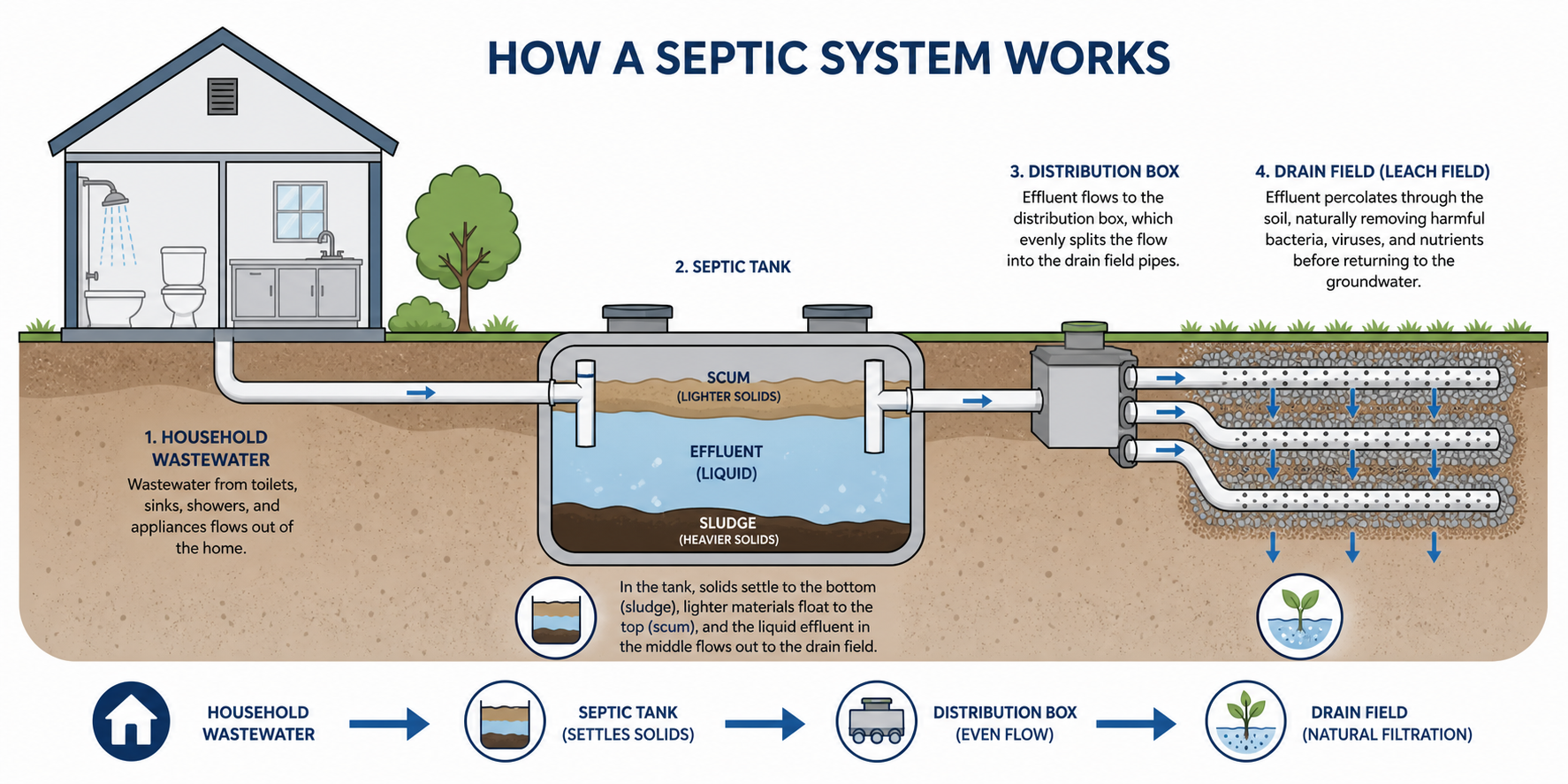
The system begins with the waste pipe exiting the structure and leads to a septic tank that is baffled and collects solids and transfers greywater through the tank to the leach field. The greywater exiting the tank goes to a distribution box (D-box) where the one pipe feeding it from the tank is discharged to multiple discharge pipes that lead to a leach field where the water is filtered into the ground.
Some key points to know about these systems.
- Every septic system will fail and needs to be replaced, as the greywater that feeds the leach field has microscopic solids that will clog the filtration bed of the field, requiring replacement. $40,000 or more is not out of line to replace the leachfield.
- You may have someone saying their system was replaced; you need to obtain this documentation, as their definition of “system” may just be one component of the system, say the D-box or the leachfield. Items that were not replaced will likely need replacement in the future so do not accept verbal documentation; request the actual quote and invoice for the septic work, including permits.
- Request copies of the pump-out receipt for the tank. The larger the dwelling and the number of occupants, will be pumped out. You can request the owner contact their septic pump company and request records for several years TO VERIFY THE FREQUENCY. More frequent is better than less.
- Septic inspection is a recommended part of buyer due diligence New Jersey Septic Inspections, LLCNJ Septic Inspections, LLC, is one such company that we have found to be reasonable and professional.
- Repairs to a system can require local and county permits and can take weeks, likely delaying settlement.
Generally speaking, it is cheaper to be connected to a Municipal Utilities Authority than owning a septic system.
If you do not have a septic system and are connected to city sewer. Sewer line scopes are very popular and money-saving. Rarely do people replace their septic line. Even insurance offered for these lines does not afford coverage to replace the whole line, they will typically cover just a broken section, which is typically found via sewer scope or other camera inserted into the line. The rub with this is that lines can have systemic issues, meaning if there is a break in one section, other breaks may be forming in oth
ers. These repairs are bandages on a larger problem.
Roots, settlement, age, and usage compromise sewer lines. Nothing lasts forever. We find that the plumber will snake a sewer line for the homeowner annually to remove roots that have invaded the pipe. These lines clearly indicate that services are masking a larger problem, which is that the sewer line needs replacement. A sewer line replacement can cost $10,000 plus or minus, so you can see the advantage of having a sewer line scope. Finding a damaged sewer line during your due diligence has a high rate of return if you compare the cost of inspection against sewer line replacement.