Hot Environmental Topics

David Sulock


Recent Posts

Changes in Oil Tank Grants, what now?

May 23, 2011, 10:52:00 PM / by David Sulock posted in tank grant changes, EDA tank grants, NJDEP tank grants

2 Comments

As of May 2011, New Jersey's leaking tank grant and non leaking tank grant are not processing new applications.   What this means for anyone who has yet to submit a grant application is that your chances of receiving funding are less than if you had submitted before May 2011.  The sheer popularity of the grant program inundated the NJDEP with applications and depleted the EDA of funds.   Couple this with a lack of cash infusions by New Jersey (funds come from the corporate tax) and it is easy to see why the well is running dry.  No one can argue that the tank grant program has not helped homeowners remove and remediate tank leaks.   The fundamental idea behind the grant was to encourage homeowners to remove buried steel tank, before they leak and to assist homeowners with remediating tanks that did leak.  There is no question that a buried steel oil tank will leak at some point, be it next week, next year or 20 years from now, rust never sleeps.  So all the tanks that were removed that did not leak saved thousand of dollars in future remediation costs.  

If you were planning to remove your tank due to a leaking concern, it is still a good idea to remove the tank because it is a replaceable item just like a roof or a hot water heater.   But since it is a replaceable item, the oil tank program no longer provides monies for removing non leaking grants.Tank Questions? Click Here

If your tank leaked, your next step is to delineate the extent of the contamination so a cost can be developed to remediate the oil contamination.  These costs can then be applied to a leaking tank grant, which New Jersey is still accepting (applications are date stamped and will be processed when monies are available).   If you find that the cost to address the tank leak is within your budget, you can hire a certified (UHOT) company to do the work and submit to the grant (when monies are available) for reimbursement.

tank grant advice

Read More

Why perform a Phase I Environmental Site Assessment

May 4, 2011, 10:42:00 AM / by David Sulock posted in Phase I, Environmental Site Assessment, ASTM 1527-05, Property Transaction Screens

0 Comments

Who requires a Phase I ESA?

Traditionally, a Phase I was contracted by the bank or lending institution on properties where financing was being arranged.  The Phase I was primarily  performed for the protection of the banks, who were concerned that if they loaned money for a contaminated property they may be held liable for the site cleanup.  Today, many banks with loans under a million dollars and borrowers supplying a down payment do not require a Phase I.  This has been an industry shift over the past several years as banks have come to understand where their limit of liability stands.

Cost for a Phase I ESA

Phase I Environmental


What is included in a Phase I?

The Phase I is a property assessment that includes a walkover of the property and associated structures; a review of historic property information including maps, aerial photographs, deeds, telephone or address directories, etc.; a review of contaminated properties in the vicinity of the subject property; a summary of knowledgeable party information and review of prior reports; and the review of local, State and Federal files pertaining to the property address.

Items evaluated in the Phase I report include: tanks, drains, pits, spills, in-ground and aboveground equipment, petroleum and chemical use, and environmental liens.

Additional issues which may be included in the Phase I at the lenders or clients request include: wetlands, radon, asbestos, lead-based paint, and drinking water. 

The Phase I report is typically research only.  Unless otherwise specified as part of the scope of work, testing or surveys are outside of the typical Phase I requirements.

Why complete a Phase I if my bank does not require one?

Although many banks are not requiring a Phase I on some commercial loans, the environmental regulations leave the burden of environmental responsibility on the property owner.  Performing a Phase I, allows a purchaser to complete the necessary due diligence.  It is this due diligence that enables a purchaser to obtain prior to taking possession of a property.  Buyer beware is relevant now more than ever in commercial real estate transactions.  If a property is purchased without a due diligence evaluation and subsequent environmental issues are found in association with the property, the property owner is now burdened with the cost of remediating the issue. The performance of a pre-purchase Phase I could alleviate the potential for finding environmental issues in the future and thereby holding up future transactions.  As a potential purchaser, the determination of environmental issues on a property could be used as leverage for the seller to remediate the concern prior to purchase or could be used to negotiate the property value pending the need for the potential purchaser to perform the cleanup.

If I don’t do a Phase I and buy a property how would I ever find out if there was an environmental problem with the site?

The most common way is when you go to sell and the potential buyer completes a Phase I and discovers an environmental Area of Concern (AOC).   Today the largest purchaser of Phase I’s is not the banks, but commercial real estate investors and owners (*transactions under $1,000,000.00).

I own a property, never had a Phase I and I am now thinking of selling the property.  Do property owners have Phase I’s performed?

One of the largest shifts in the commercial real estate market today is that many land owners are having a Phase I performed to root out environmental issues before they become an issue when a buyer is found.   A buyer performed Phase I is viewed as both a marketing tool and an environmental property assessment that can help sellers anticipate issues with a property.  It can be akin to a homeowner having a home inspection completed to address issues that a purchaser might find during their inspection. 

If an environmental issue is found in a Phase I report on a property I am buying, can I still purchase the property?

 If the issue is fully disclosed to the lender (if one is involved) and the buyer is wiling to accept the liability and cost of addressing the issue, then yes you can buy the property.  But the real question is should I address the issue before buying the property?

The investigation of potential issues found in the Phase I is typically addressed as part of a Phase II Environmental Site Assessment.

Read More

Oil Tank Removal in New Jersey

Jan 28, 2011, 9:00:00 PM / by David Sulock posted in oil tank grants, tank grants, NJDEP oil tank removal grant, free oil tank removal, oil tank removal, oil tank removal new jersey, oil tank removal nj, tank removal, tank removal grants

1 Comment

The purpose of this document is to provide a concise reference to the preferred practices and procedures for oil tank removals in NJ. 
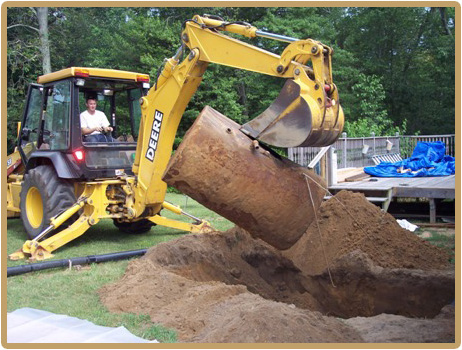
oil tank removal nj 

Buried oil tanks raise a variety of environmental, safety, legal and economic concerns for home owners and home buyers. The largest concern relates to the environmental issues that are caused when the oil tank leaks and causes  soil or groundwater  contamination. 

The following is a breakdown of the proper steps that should taken in order to remove your residential oil tank. 

Step 1: Permitting 

Local construction/demolition and/or fire subcode permits need to be applied for and the permits approved by the municipal office.     Once the local permits are approved, it is typical that the local inspector will need to be onsite for all or a part of the removal activities.  Permit application, insuring permit approval and scheduling of local inspectors is always done by Curren Environmental before removing the oil tank. 

Step 2: Underground Utilities 

State law requires that before any excavation activities can commence, a utility markout will need to be performed. The company performing the oil tank removal should call for an underground markout through “NJ One Call”.  t is the law in New Jersey and other states, to call for a utility markout before you dig. Make sure the company you choose to remove the tank obtains a markout confirmation number.  It protects all parties involved. 

Step 3: Oil Tank Cleaning 

Cleaning of the tank will consist of wiping, squeegeeing and removing all liquids and sludges from the tank.  Liquids are then either  placed into onsite storage containers or a vacuum truck. . 

Step 4: Oil Tank Removal    

It is recommended that all oil tanks be removed from the ground  when taking a tank out of service.  (In some instances when removal of the oil tank may damage the integrity of the structure an abandonment in place can be performed.)  By removing the tank from the ground a site assessment can be performed to determine if the tank has maintained integrity. 

Step 5: Oil Tank Site Assessment 

After the oil tank is removed a site assessment can performed by Curren’s certified NJDEP Subsurface Evaluator.  The site assessment to evaluate whether contamination is present in the excavation can be carried out in a variety of ways  while the tank is being removed. 

▸   Evidence of contamination can be determined from product odors, product stained soils, and/or visual evidence of free product.   

▸   Inspection of the Underground Storage Tank, (UST), for evidence of corrosion or perforations. 

▸   By a series of observations and measurements during the tank excavation and decommissioning operations such as  soil and ground water sampling and analysis. 

In New Jersey the standard analytical testing method for #-2 heating oil is Extractable Petroleum Hydrocarbons (EPH). All samples must be submitted to an independent NJDEP licensed laboratory for analysis.  EPH results are measured in part per million or ppm. Samples results above 5,100 ppm are actionable and require remedial activities to be completed.   EPH results  between 1,000 ppm and 5,100 ppm require an additional analysis. 

Step 6: Backfilling 

Once the tank is removed from the ground the void space must be backfilled with clean certified  fill.  The general equation for backfilling is five cubic yards of backfill material for every 1000 gallons of storage capacity.  For example a 500-gallon tank would require 2.5 cubic yards of fill material.  Suppling and installing the backfill is always performed by the firm removing the tank and should be included in tank removal cost. 

Step 7: Site Investigation Report - Tank Certification

Curren Environmental will prepare a Site Investigation Report which will document the tank removal activities.  The report will detail the heating oil tank removal and provide certification of the tank removal.   The report will include the following information: 

   1.  Copy of the local permit for tank removal 
   2.  Liquid receipt from the tank cleaning. 
   3.  A thorough written description of the tank removal activities. 
   4.  Photo documentation of tank removal (if available). 
   5.  A copy of the tank scrap receipt. 
   6.  Any applicable laboratory test results. 
   7.  A detailed text description of the condition of the tank and if any petroleum contamination was noted in the tank excavation. 

Curren Environmental, Inc. is a licensed by the  New Jersey Department of Environmental Protection (NJDEP) to perform closure activities associated with Underground Storage Tanks, (USTs).   

Read More

Subscribe to Email Updates

Lists by Topic

see all

Posts by Topic

see all

Recent Posts