
Oil tanks have a finite life span, they rust and they leak. Did you know the propane tank for your BBQ grill only has a 15-year lifespan? If you own your BBQ grill propane tank and take it to a home center to get refilled they will not refill tanks older than 15 years.
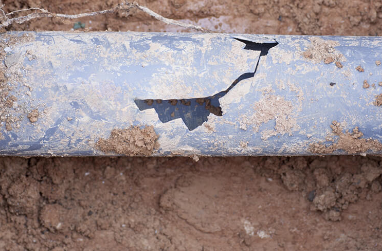
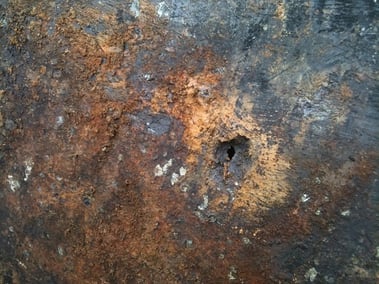 Not shocking, things get old, what is shocking, and mostly to your bank account, is the cost of cleaning up an oil tank leak. Ever paint and spill paint? You have to clean the paint before it dries or it is too hard to clean up, just as with a stain on your clothes. Think of that with an oil tank leak. When an oil tank leaks it tends to leak until there is no more liquid left in the tank. A hole in the bottom of the tank can keep leaking, while slow, it can keep leaking forever. If there is a hole in the top of the oil tank, either cut out to fill the oil tank or a hole from rust, this will allow the rain or water to fill the hole and the liquid from the oil tank to spill over the top of the oil tank and run down the sides.
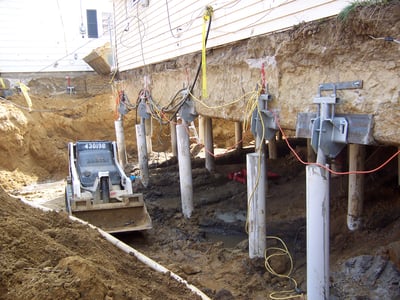 Visualize this, go to your refrigerator pop a pin in a container of milk or orange juice, and walk away. Come back and you got a big mess. So when oil leaks you have to excavate soils that have oil impact, gravity pulls the oil down, many times deeper than the foundation of the dwelling requiring structural supports of the dwelling foundation to allow the excavation to be safely advanced DEEPER than the existing foundation. If it sounds like I am speaking a foreign language, understand this to structurally support a foundation, you need engineering plans, permits, and typical helical piers to support the foundation. Typical costs? $11,000 to $20,000.00 on average. That doesn't include soil excavation, disposal, testing, etc., that is just to dig safely.
The following is from a listing for a home for sale:
Please note, property may have an underground oil tank. No testing has been completed, the seller will not test or allow testing before settlement. Come see this 4 bedroom, 2 full bath home. The home offers a living room, eat-in kitchen, dining room, and family room. The home has a full basement. Located close to local amenities! Home will not be on the market long. Schedule your showing today! The property is being sold As-Is condition. Buyer is responsible for all certifications. The seller never occupied. Neither the seller or listing agent make any representation as to the accuracy of any information contained herein. Buyer must conduct their own due diligence.
Yes, you read correctly, the property has an oil tank and the buyer can't test it. The buyer won't allow testing because the buyer doesn't want to know if the oil tank is leaking. Leaking oil tanks cost money to fix and buyers will not proceed with the purchase when there is an unknown liability regarding cleanup of the oil tank leak. Unfortunately, there is no standard pricing for oil tank leak cleanups. It's not like a pizza. Looking back over the last 30 days from the date of this writing we have completed oil tank projects that required no remediation, $8,950.00 of remediation, $42,731.00 of remediation, one was $19,564.00 another one was around $13,000.00, a small AST leak was $5,672.00. The cost to remediate and oil tank leak varies, but to even determine and diagnose the extent of contamination you have to spend several thousand dollars to define the area.
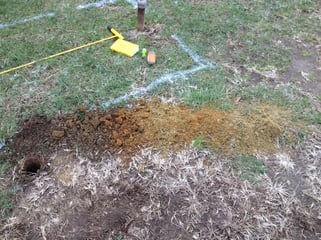
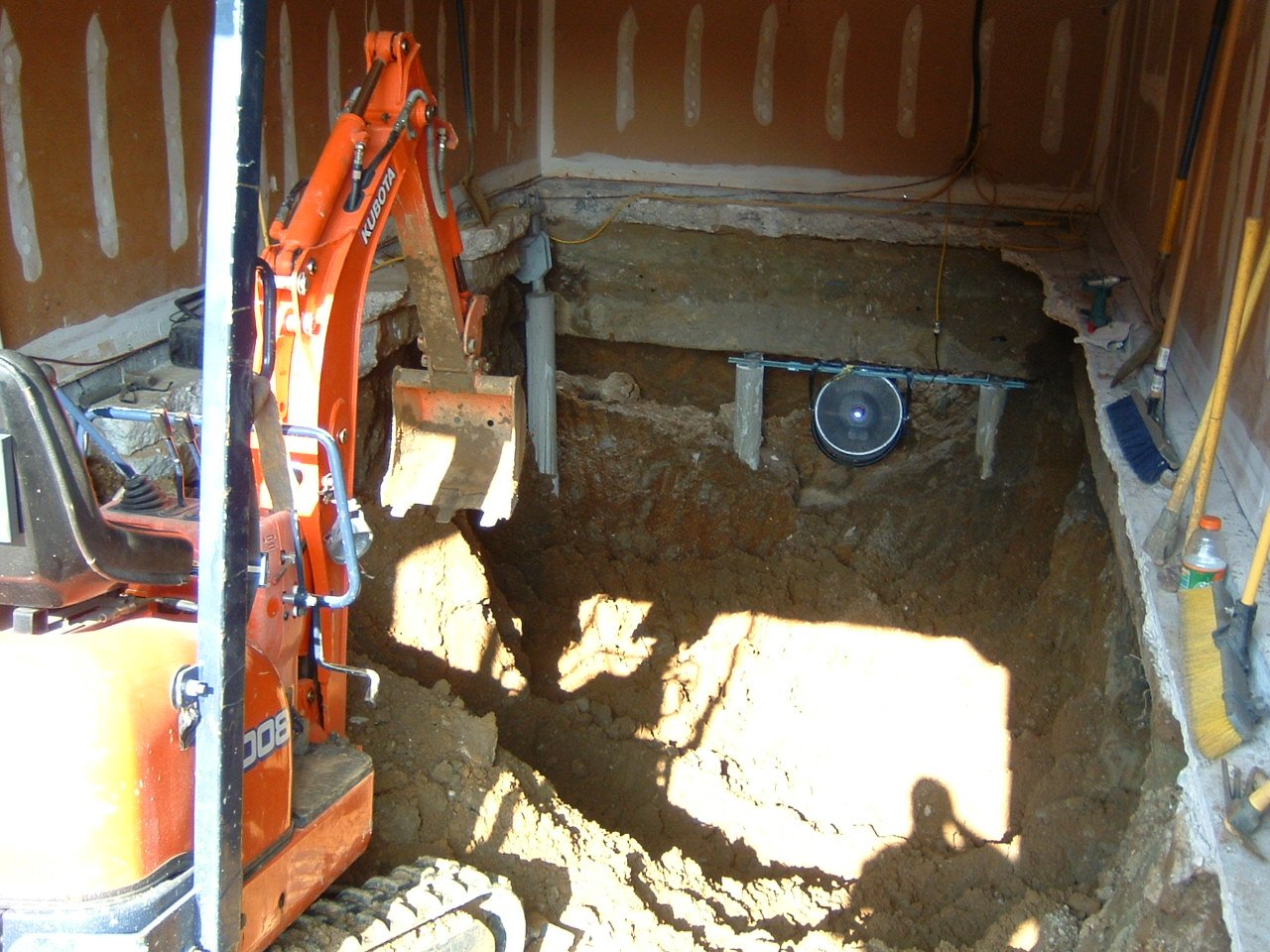
Do you think digging up the oil that leaked below this garage was inexpensive?
The reason there is no home in this photo is that it had to be demolished to remove the contaminated soil from the underground oil tank leaking.
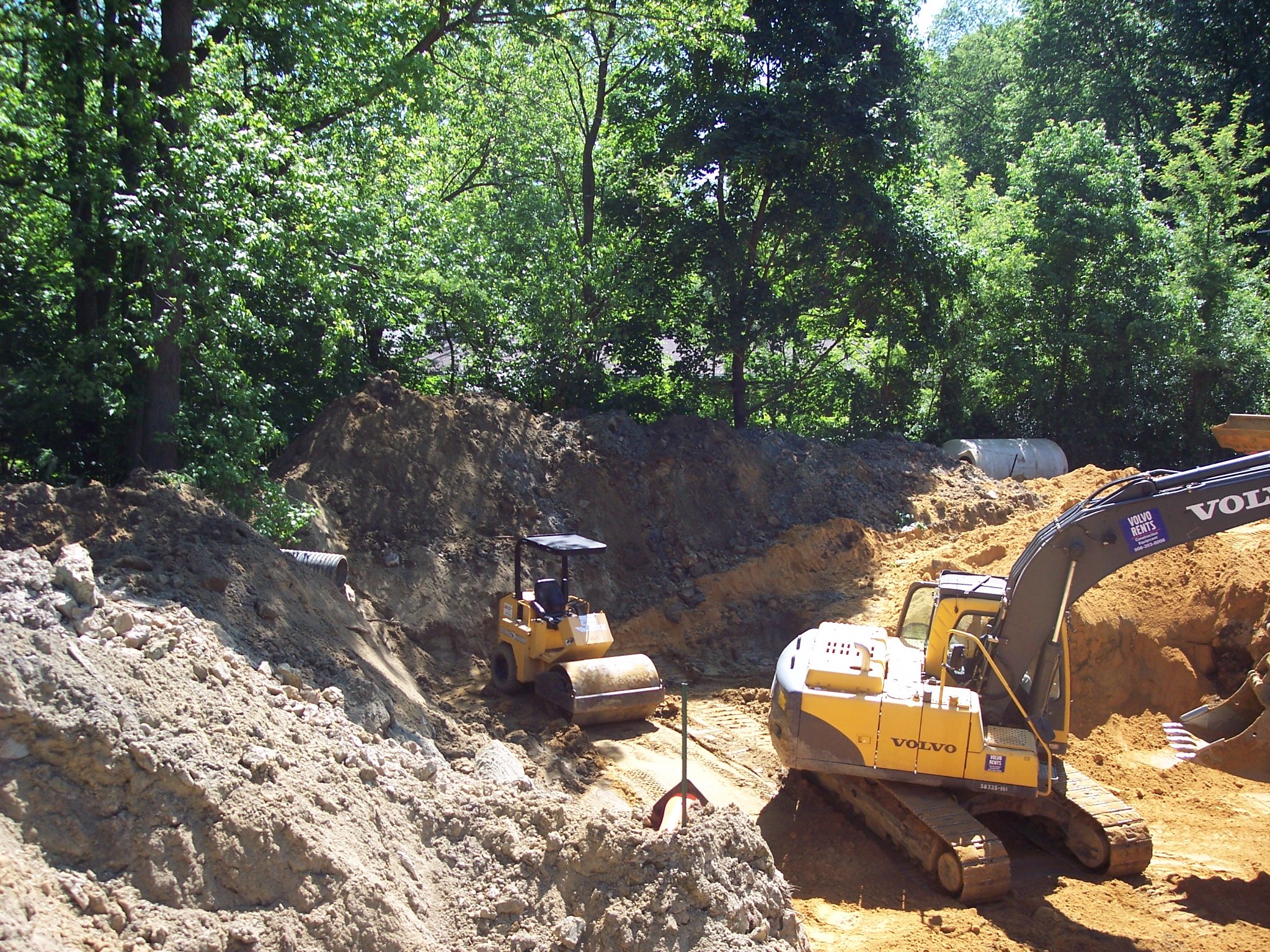
With unknown costs for cleanup, you can see why a seller doesn't want to deal with an oil tank. You can also see how dangerous it is for a buyer to ignore evaluating a property for a tank Tank Sweep, testing a known tank Tank Testing.



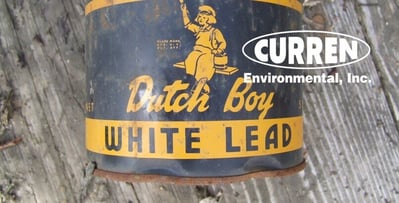
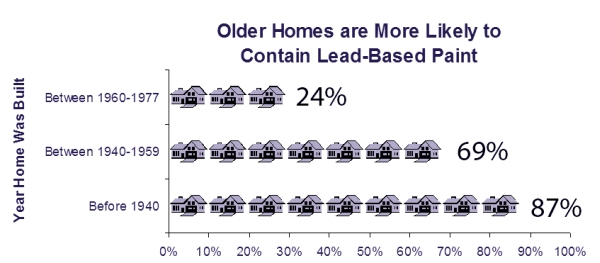
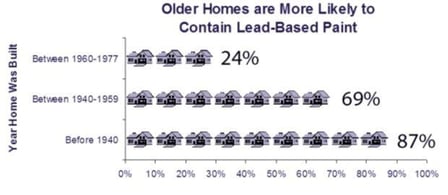 Any property subject to the NJ Lead Safe Law is now providing property owners inspection reports on lead. New Jersey lead licensing requires licensed firms to document certain facts regarding inspections nad reports. In addition, the lead inspections have included dust wipe sampling which tests for lead, these data points are now to be disclosed to future renters and buyers.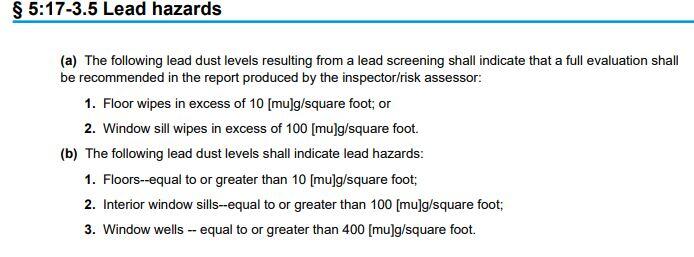

 Once the inspection is complete, you should receive a report detailing what was done during the mold inspection and the interpretation of the lab data. Curren finds many inspectors leave out the interpretation of the lab data, which is pertinent information for the homeowner.
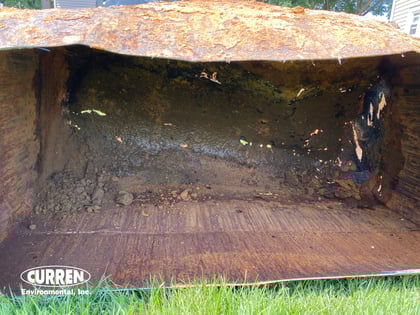 In this situation, the owner (or prior owner) stopped using the oil tank and maybe went to an above-ground storage tank (AST) or converted to natural gas. If they replaced the oil tank with an AST it is likely because the underground oil tank (UST) had problems, either leaking or taking on water in the oil tank. No one wants to spend money for the sake of spending money. Why would you want to waste money to test the oil tank, because if it's leaking it would need to be removed anyway? The professional recommendation is to remove and test under the tank. The property owner should have removed the oil tank when they stopped using the oil tank rather than shifting the buyer to the cost of removing the oil tank and testing for soil contamination.
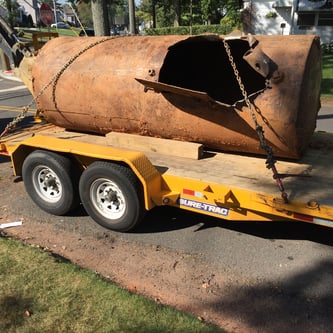 The house in this situation is circa 1900, I would estimate the home was heated by wood or coal with an oil conversion after WWII, say the tank was installed in 1950, making the oil tank 74 years old. This means the oil tank should be retired and collecting social security. Clearly, the oil tank should be removed and replaced, because even if the oil tank test passes, it would be recommended to remove the oil tank. After all, the oil tank is beyond any expectation of a reusable lifespan. The oil tank is likely leaking, because what do you have that is 74 years old and is functionally brand new - I'd love to hear about it!
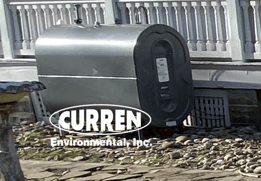 Unless you have paperwork saying the oil tank was replaced, it's the original, I can only recall two people in the past 35 years who replaced their UST with another UST and in both cases, they replaced it because the 1st oil tank leaked and it was dug it up and installed the new tank in the same excavation. Years later when we removed oil tank #2, boom oil was found in the soils.
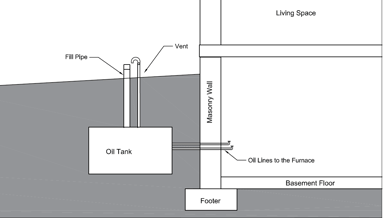 The concern regarding an oil tank is all things have a finite lifespan and require replacement. You can complete a limited subsurface investigation, a technical name for a tank test, around the current location of the number two heating oil Underground Storage Tank, (UST),